



Citation
When a new patent lists an older one as a reference. More citations = more influence.
WIPO technology field · 2025
The 23 patent applications (not yet granted) that served most often as references for new inventions in this field.
Published applications are still under review: they may be granted, amended or rejected — but they already influence new inventions.
When a new patent lists an older one as a reference. More citations = more influence.
The U.S. Patent Office reviewer. Cites what is too similar to the application.
too similarThe company or inventor filing the patent. Cites what inspired their work.
inspirationThe inventions the Patent Office used most for comparison — the closest to what is being patented today.
Highlights
Leblanc Warren F 2017
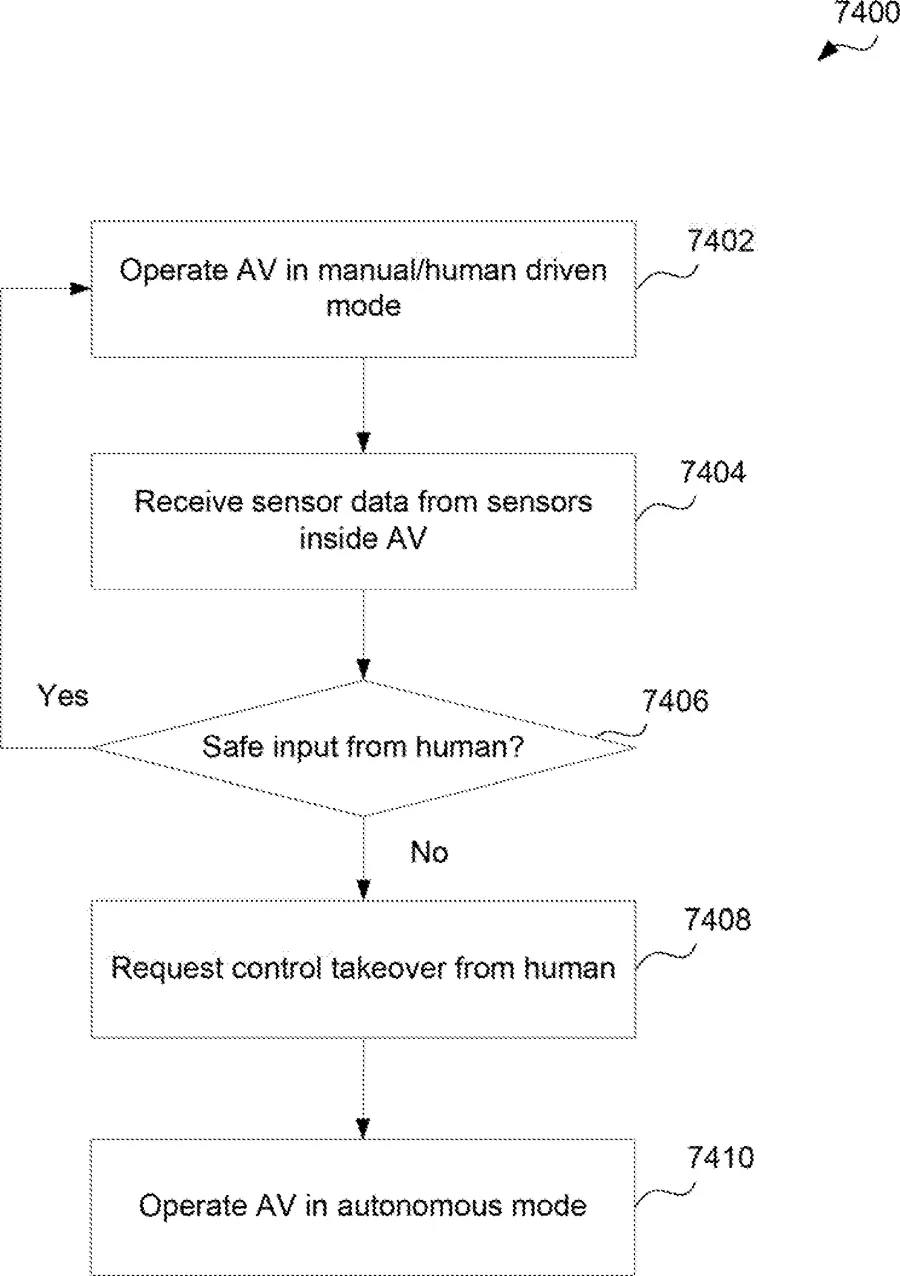
2 inventors: Dennis J. Dupray and Frederick W. LeBlancVarious systems, methods, for unmanned aerial vehicles (UAV) are disclosed. In one aspect, UAVs operation in an area may be managed and organized by UAV corridors, which can be defined ways for the operation and movement of UAVs. UAV corridors may be supported by infrastructures and/or systems supported UAVs operations. Support infrastructures may include support systems such as resupply stations and landing pads. Support systems may include communication UAVs and/or stations for providing communications and/or other services, such as aerial traffic services, to UAV with limited communication capabilities. Further support systems may include flight management services for guiding UAVs with limited navigation capabilities as well as tracking and/or supporting unknown or malfunctioning UAVs.
22citations
Intel Corp 2022
31 inventors: Hassnaa Moustafa and 30 more20citations
DR Roads AI Ltd 2020
3 inventors: Roni DULBERG and 2 moreFull ranking
Each number shows how many times the patent was used as a reference by new U.S. patents granted in 2025. Tap any of them to see the drawing, who invented it and what it does.
Leblanc Warren F2017
24citations
Top of the listWhat it does
Various systems, methods, for unmanned aerial vehicles (UAV) are disclosed. In one aspect, UAVs operation in an area may be managed and organized by UAV corridors, which can be defined ways for the operation and movement of UAVs. UAV corridors may be supported by infrastructures and/or systems supported UAVs operations. Support infrastructures may include support systems such as resupply stations and landing pads. Support systems may include communication UAVs and/or stations for providing communications and/or other services, such as aerial traffic services, to UAV with limited communication capabilities. Further support systems may include flight management services for guiding UAVs with limited navigation capabilities as well as tracking and/or supporting unknown or malfunctioning UAVs.
Intel Corp2022
22citations
92% of 1st (24)What it does
Sensor data is received from a plurality of sensors, where the plurality of sensors includes a first set of sensors and a second set of sensors, and at least a portion of the plurality of sensors are coupled to a vehicle. Control of the vehicle is automated based on at least a portion of the sensor data generated by the first set of sensors. Passenger attributes of one or more passengers within the autonomous vehicles are determined from sensor data generated by the second set of sensors. Attributes of the vehicle are modified based on the passenger attributes and the sensor data generated by the first set of sensors.
DR Roads AI Ltd2020
20citations
83% of 1st (24)What it does
Systems and methods for detecting electromagnetic emissions to monitor and manage road traffic. In one implementation, a system is provided for determining at least one of location, speed, and direction of vehicles on a roadway. The system comprising at least one receiver configured for placement at one or more fixed locations along the roadway to detect a plurality of non-reflected electromagnetic emissions originating from a plurality of vehicles. The system further comprise at least one processor configured to receive signal information from the at least one receiver and to identify in the plurality of non-reflected electromagnetic emissions an electromagnetic waveform of a vehicle. The at least one processor may calculate at least one of a Doppler effect, a phase difference, or a time difference of non-reflected electromagnetic emissions associated with the identified electromagnetic waveform, and determine at least one of a location, speed, and direction of the vehicle.
Ai Inc2022
18citations
75% of 1st (24)What it does
Provided is a method for operating a robot, including: capturing images of a workspace; capturing movement data indicative of movement of the robot; capturing LIDAR data as the robot performs work within the workspace; comparing at least one object from the captured images to objects in an object dictionary; identifying a class to which the at least one object belongs; generating a first iteration of a map of the workspace based on the LIDAR data; generating additional iterations of the map based on newly captured LIDAR data and newly captured movement data; actuating the robot to drive along a trajectory that follows along a planned path by providing pulses to one or more electric motors of wheels of the robot; and localizing the robot within an iteration of the map by estimating a position of the robot based on the movement data, slippage, and sensor errors.
NNG Software Developing and Commercial LLC2020
16citations
67% of 1st (24)What it does
A road hazard, such as a traffic collision, traffic regulationviolation, road surface damage, or any other traffic obstruction, is detected by a sensor in a vehicle. The sensor data is sent periodically, or upon detecting the anomaly, to a server over the Internet via a first wireless network, together with a vehicle identifier (Vehicle Identification Number (VIN) or the license plate number) and its GNSS or GPS geographic location. The server analyzes the sensor data, and in response sends a notification message to a client device, such as a smartphone, or to a group of vehicles in close vicinity to the first vehicle, via a wireless network over the Internet. The received message may be used by each of the vehicles in the group for controlling, limiting, activating, or otherwise affecting an actuator operation, or may be used for notifying the driver using a dashboard display.
SITA Information Networking Computing UK Ltd2022
16citations
67% of 1st (24)What it does
A system and method for tracking baggage on cruise liners are provided. A baggage tag is created which includes a unique baggage identifier and a unique passenger identifier that has been allocated by a reservation system. The identifiers are associated and stored in a baggage message. The baggage tag is affixed to an item of baggage and as the passenger checks in the item the tag is scanned and the bag validated and the status of the item in the baggage message is updated. When the passenger boards the ship, they scan a touch point with a mobile communications device which indicates that the item of baggage can now be delivered to their cabin. Shortly before arrival at port, the bags are loaded into a baggage container for unloading at the port and each bag tag is scan and associated with a scanned container identifier. The container is notified to the passenger through a message sent to their mobile communications device. When the container is unloaded the bag tag and the container are both scanned to ensure that the item of baggage has been loaded into the correct container and an error is flagged if the container associated with the bag tag does not match the scanned container.
Ai Inc2020
15citations
63% of 1st (24)What it does
Provided is a method including capturing, by an image sensor disposed on a robot, images of a workspace; obtaining, by a processor of the robot or via the cloud, the captured images; comparing, by the processor of the robot or via the cloud, at least one object from the captured images to objects in an object dictionary; identifying, by the processor of the robot or via the cloud, a class to which the at least one object belongs using an object classification unit; and instructing, by the processor of the robot, the robot to execute at least one action based on the object class identified.
SITA Information Networking Computing UK Ltd2022
15citations
63% of 1st (24)What it does
There is provided an article handling system, method and computer program product for uniquely identifying an article. The system comprises a mobile device having scanning means that obtains a first article identifier and a second article identifier from one or more article tags associated with an article. A mobile application on the mobile device generates a message comprising a first message line including the first article identifier and a second message line including the second article identifier, and sends the message to a destination location. In this way, the article may be subsequently identified at the destination location using either or both of the first article identifier or the second article identifier.
P5T Ltd2011
14citations
58% of 1st (24)What it does
The present specification describes a check in system for checking a passenger onto a flight. An indication of the airline and a passenger's reservation code is sent from a kiosk to a remote computer system using communications that are sent through the internet. On receipt of these details the remote computer system accesses the airline reservation system and requests a copy of the passenger name record, again using communications that are sent through the internet. The data in the passenger name record is used to check in the passenger at the kiosk. It is also used to assess whether the passenger's baggage is outside the baggage allowance for the ticket. The passenger is able to pay any fees at the kiosk further using communications that are sent through the internet. The specification also describes a baggage drop system using a similar process to issue baggage tags.
Independent inventors2012
14citations
58% of 1st (24)What it does
Embodiments of the present concept provide means to control the payback percentage of games being played on gaming devices. In one example, a gaming device includes a processor configured to initiate a payback-controlling event and determine a game outcome to display on the game display in response to a gaming event being initiated. Here, the determined game outcome is a payback-controlling outcome when the payback-controlling event satisfies the payback-controlling criterion, and the determined game outcome is a game outcome determined from the base-game paytable when the payback-controlling event does not satisfy the payback-controlling criterion.
Singularity Education Group2014
14citations
58% of 1st (24)What it does
Embodiments described herein include a delivery system having unmanned aerial delivery vehicles and a logistics network for control and monitoring. In certain embodiments, a ground station provides a location for interfacing between the delivery vehicles, packages carried by the vehicles and users. In certain embodiments, the delivery vehicles autonomously navigate from one ground station to another. In certain embodiments, the ground stations provide navigational aids that help the delivery vehicles locate the position of the ground station with increased accuracy.
Independent inventors2016
14citations
58% of 1st (24)What it does
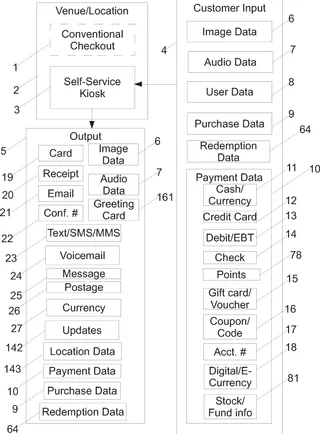
A system for performing various methods of sending, receiving, distributing, and utilizing funds and/or credits is disclosed. In many embodiments, various communications platforms and/or protocols may be employed. Methods of sending funds or credits may be practiced in different environments, including physical and electronic environments. According to some preferred embodiments, users may perform a variety of transactions including various gifting functions, re-gifting functions, and social interactions simply, through various types of electronic communications, including, but not limited to electronic messaging.
Cobalt Robotics Inc2017
14citations
58% of 1st (24)What it does
A mobile robot is configured for operation in a commercial or industrial setting, such as an office building or retail store. The robot can patrol one or more routes within a building, and can detect violations of security policies by objects, building infrastructure and security systems, or individuals. In response to the detected violations, the robot can perform one or more security operations. The robot can include a removable fabric panel, enabling sensors within the robot body to capture signals that propagate through the fabric. In addition, the robot can scan RFID tags of objects within an area, for instance coupled to store inventory. Likewise, the robot can generate or update one or more semantic maps for use by the robot in navigating an area and for measuring compliance with security policies.
The inventions companies themselves named as the foundation of their work — the market’s references.
Highlights
Independent inventors 2022
Inventor: Walter RosenbaumThe present invention relates to a method for estimating an accident risk of an autonomous driving unit. The method produces helpful results with less autonomous driving cycles. An autonomous-driving quantity, quantifying an autonomous-driving quality of the driving of the driving unit, is determined from driving values that have been determined from monitoring at least one driving parameter of the driving unit during autonomous driving. The autonomous-driving quantity is associated with a plurality of manual-driving quantities that have been determined from the same driving parameter during manual driving periods of different driving units. An autonomous-driving accident rate value is determined from accident rate values associated with those manual-driving quantities.
61citations
Independent inventors 2023
Inventor: Walter Rosenbaum59citations
Independent inventors 2022
Inventor: Walter RosenbaumFull ranking
Each number shows how many times the patent was used as a reference by new U.S. patents granted in 2025. Tap any of them to see the drawing, who invented it and what it does.
Independent inventors2022
61citations
Top of the listWhat it does
The present invention relates to a method for estimating an accident risk of an autonomous driving unit. The method produces helpful results with less autonomous driving cycles. An autonomous-driving quantity, quantifying an autonomous-driving quality of the driving of the driving unit, is determined from driving values that have been determined from monitoring at least one driving parameter of the driving unit during autonomous driving. The autonomous-driving quantity is associated with a plurality of manual-driving quantities that have been determined from the same driving parameter during manual driving periods of different driving units. An autonomous-driving accident rate value is determined from accident rate values associated with those manual-driving quantities.
Independent inventors2023
61citations
Top of the listWhat it does
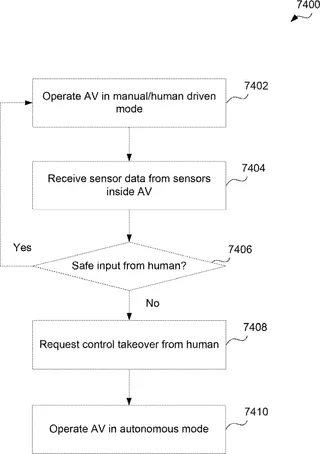
A method and a system analyze the control of a vehicle having an autonomous driving unit. A change in the driving mode from autonomous driving to manual driving is detected, and at least one driving parameter before and/or after detecting the change is monitored. Based on driving values obtained by the monitoring with respect to the detected change in driving mode, at least one driving quantity quantifying the quality of interplay between the autonomous driving unit and a human driver is determined.
Independent inventors2022
59citations
97% of 1st (61)What it does
To provide an enhanced method to determine from a driving characteristics of the vehicle a long term mechanical stress of a vehicle, it is proposed that during operation of the vehicle an acceleration of the vehicle is detected by an acceleration sensor in the vehicle and evaluated by a vehicle analyzing system in the vehicle, wherein a driving parameter occurring during an acceleration event in which the vehicle acceleration is above a predetermined threshold is used to determine a driving characteristics value of the vehicle.
C3, Inc.2017
49citations
80% of 1st (61)What it does
Systems, methods, and devices for a cyberphysical (IoT) software application development platform based upon a model driven architecture and derivative IoT SaaS applications are disclosed herein. The system may include concentrators to receive and forward time-series data from sensors or smart devices. The system may include message decoders to receive messages comprising the time-series data and storing the messages on message queues. The system may include a persistence component to store the time-series data in a key-value store and store the relational data in a relational database. The system may include a data services component to implement a type layer over data stores. The system may also include a processing component to access and process data in the data stores via the type layer, the processing component comprising a batch processing component and an iterative processing component.
WEBGEN SYSTEMS Inc2003
47citations
77% of 1st (61)What it does
Automatic energy management is provided, in even the most complex multi-building system. The necessity of a human operator for managing energy in a complex, multi-building system is reduced and even eliminated. Computer-based monitoring and computer-based recognition of adverse energy events (such as the approach of a new energy peak) is highly advantageous in energy management. Immediate automatic querying of energy users within a system of buildings for energy curtailment possibilities is provided. Such immediate, automatic querying may be answered by the energy users through artificial intelligence and/or neural network technology provided to or programmed into the energy users, and the queried energy users may respond in real-time. Those real-time computerized responses with energy curtailment possibilities may be received automatically by a data processing facility, and processed in real-time. Advantageously, the responses from queried energy users with energy curtailment possibilities may be automatically processed into a round-robin curtailment rotation which may be implemented by a computer-based control system. Thus, impact on occupants is minimized, and energy use and energy cost may be beneficially reduced in an intelligent, real-time manner. The invention also provides for early-recognition of impending adverse energy events, optimal response to a particular energy situation, real-time analysis of energy-related data, etc.
Johnson Controls Technology Co2011
46citations
75% of 1st (61)What it does
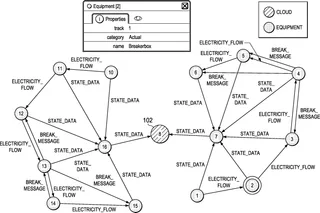
A building management system includes graphical control elements for viewing and interacting with the building management system. Graphical control elements conduct analysis of information received from the building management system and may be used to control building equipment, monitor operational statuses, diagnose faults, or conduct other building management system tasks.
Singularity Education Group2014
46citations
75% of 1st (61)What it does
Embodiments described herein include a delivery system having unmanned aerial delivery vehicles and a logistics network for control and monitoring. In certain embodiments, a ground station provides a location for interfacing between the delivery vehicles, packages carried by the vehicles and users. In certain embodiments, the delivery vehicles autonomously navigate from one ground station to another. In certain embodiments, the ground stations provide navigational aids that help the delivery vehicles locate the position of the ground station with increased accuracy.
Unilectric LLC2016
46citations
75% of 1st (61)What it does
A system for hazard mitigation in a structure including a subsystem coupled to a circuit of an electrical distribution system and set of nodes. The nodes monitor operating conditions of the circuit and generate data in response. A data processing system is operable to process the data generated by the set of nodes and in response identify a trigger representing a condition requiring that an action be taken. The data processing system processes the trigger in accordance with a predetermined policy to initiate an action by the subsystem.
Independent inventors2002
43citations
70% of 1st (61)What it does
Gaming apparatus and methods of conducting a wagering game of chance. A gaming machine is disclosed which is configured for mutually concurrent play of a plurality of games of chance on a single display screen. A method of conducting a wagering activity includes providing a player with a plurality of differing games of chance, at least some of which are mutually concurrently playable on a single screen display of a gaming device and enabling mutually concurrent play of the plurality of differing games of chance on the single screen display. Various other gaming machine configurations and methods of play related to multiple differing games of chance on a single display screen are also disclosed herein. Networked gaming machines are also disclosed.
Google LLC2015
41citations
67% of 1st (61)What it does
This patent specification relates to apparatus, systems, methods, and related computer program products for providing home security/smart home objectives. More particularly, this patent specification relates to a plurality of devices, including intelligent, multi-sensing, network-connected devices, that communicate with each other and/or with a central server or a cloud-computing system to provide any of a variety of useful home security/smart home objectives.
Swiss Reinsurance Co Ltd2019
41citations
67% of 1st (61)What it does
An electronic, real-time system performs maneuver recognition of vehicles based on dynamically measured telematics data, particularly the sensory data of smartphone sensors, and more particularly data from the accelerometer sensor and the global positioning system (GPS) sensor and/or the gyroscope sensor of a smartphone. The axes of the smartphone may be moving independently relative to the axes of the vehicle and thus do not need to be aligned with the axes of the vehicle. Driver behaviors and operational parameters are automatically measured and discriminated, based on automatically individuated and measured driver maneuvers within various measured to vehicle trajectories, and an output signal is generated based upon derived risk measure parameters and/or crash attitude measure parameters. The system can use score-driven, especially risk-score driven, operations associated with motor vehicles or transportation modes for passengers or goods, and reliant on a dynamic, telematics-based data aggregation and dynamically measured driving maneuvers, respectively.









 Computer technology

 Transport
 Measurement

 IT methods for management

 Digital communication
 Handling

 Electrical machinery and energy