



Citation
When a new patent lists an older one as a reference. More citations = more influence.
WIPO technology field · 2025
The 21 patents that served most often as references for new inventions in this field.
When a new patent lists an older one as a reference. More citations = more influence.
The U.S. Patent Office reviewer. Cites what is too similar to the application.
too similarThe company or inventor filing the patent. Cites what inspired their work.
inspirationThe inventions the Patent Office used most for comparison — the closest to what is being patented today.
Highlights
University of British Columbia 1997
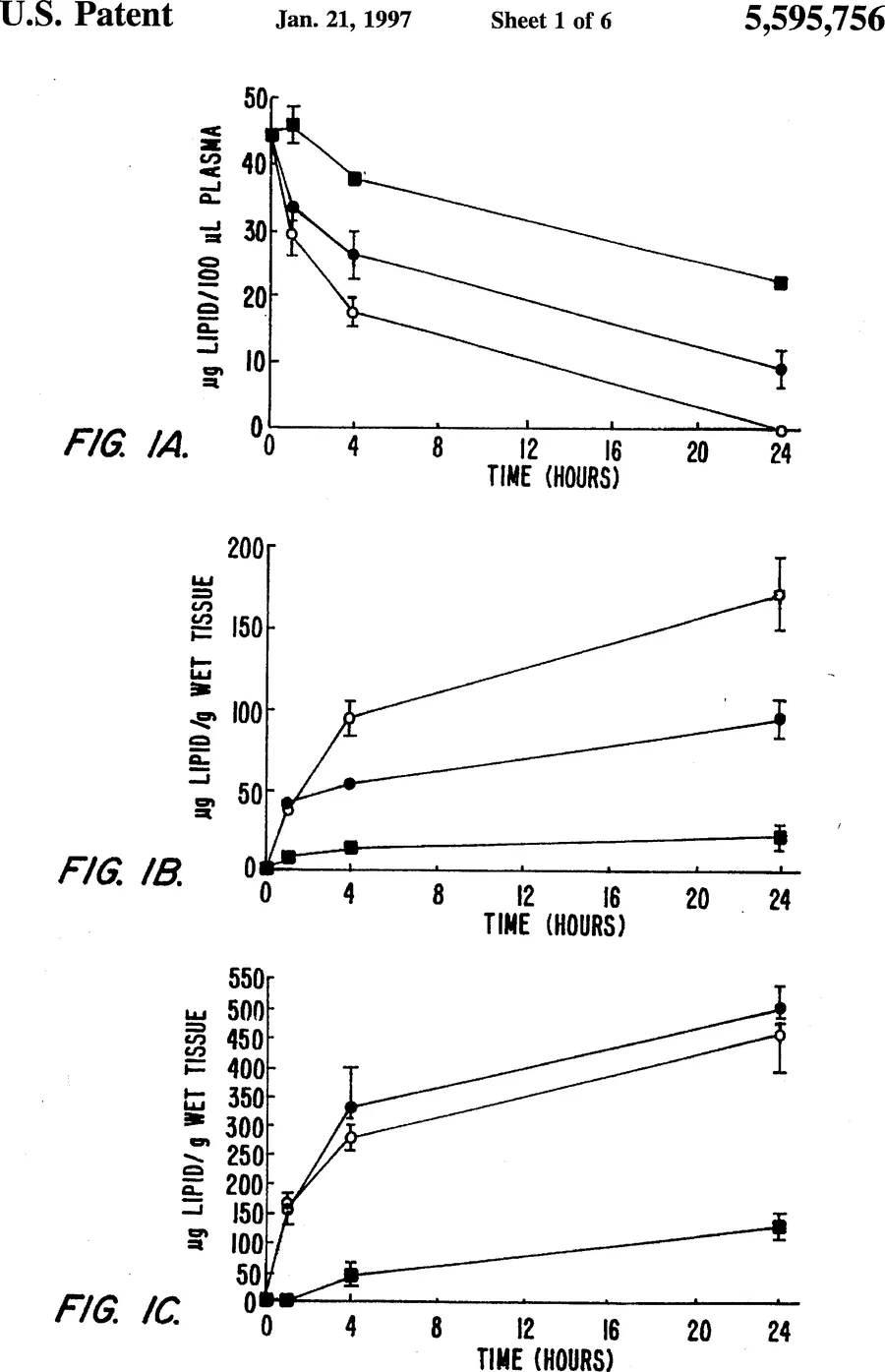
4 inventors: Marcel B. Bally, Nancy L. Boman and 2 moreLiposomal compositions encapsulating bioactive agents and having improved circulation longevity of the agents are disclosed. Such liposomes combine a low pH of the solution in which a bioactive agent is entrapped and a sugar-modified lipid or an amine-bearing lipid, the combination of which enhances the retention of the encapsulated bioactive agent and thereby promotes circulation longevity. The present invention also discloses methods of making and using such compositions.
15citations
Protein Design Labs Inc 2001
2 inventors: Cary L. Queen and 1 more12citations
Chugai Pharmaceutical Co Ltd 2016
10 inventors: Tomoyuki Igawa and 9 moreFull ranking
Each number shows how many times the patent was used as a reference by new U.S. patents granted in 2025. Tap any of them to see the drawing, who invented it and what it does.
University of British Columbia1997
18citations
Top of the listWhat it does
Liposomal compositions encapsulating bioactive agents and having improved circulation longevity of the agents are disclosed. Such liposomes combine a low pH of the solution in which a bioactive agent is entrapped and a sugar-modified lipid or an amine-bearing lipid, the combination of which enhances the retention of the encapsulated bioactive agent and thereby promotes circulation longevity. The present invention also discloses methods of making and using such compositions.
Protein Design Labs Inc2001
15citations
83% of 1st (18)What it does
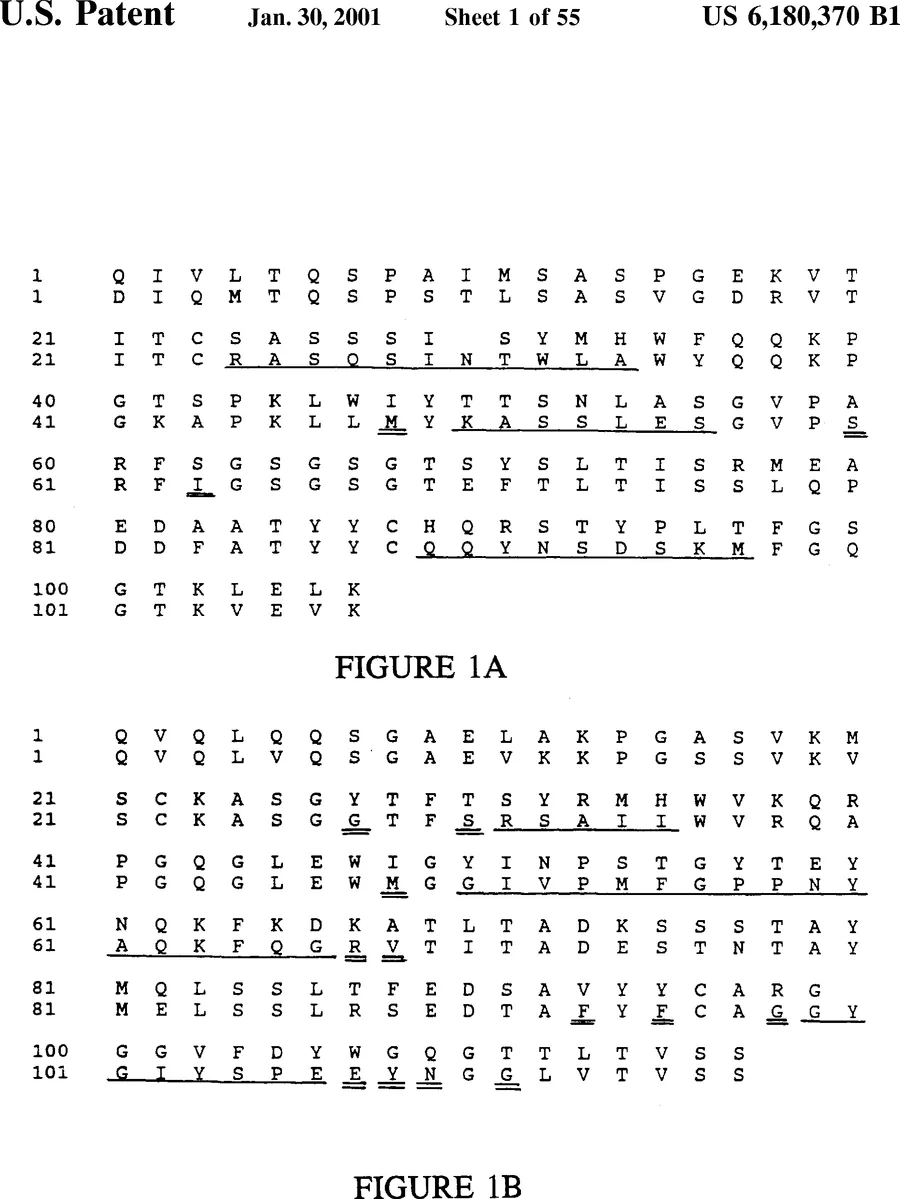
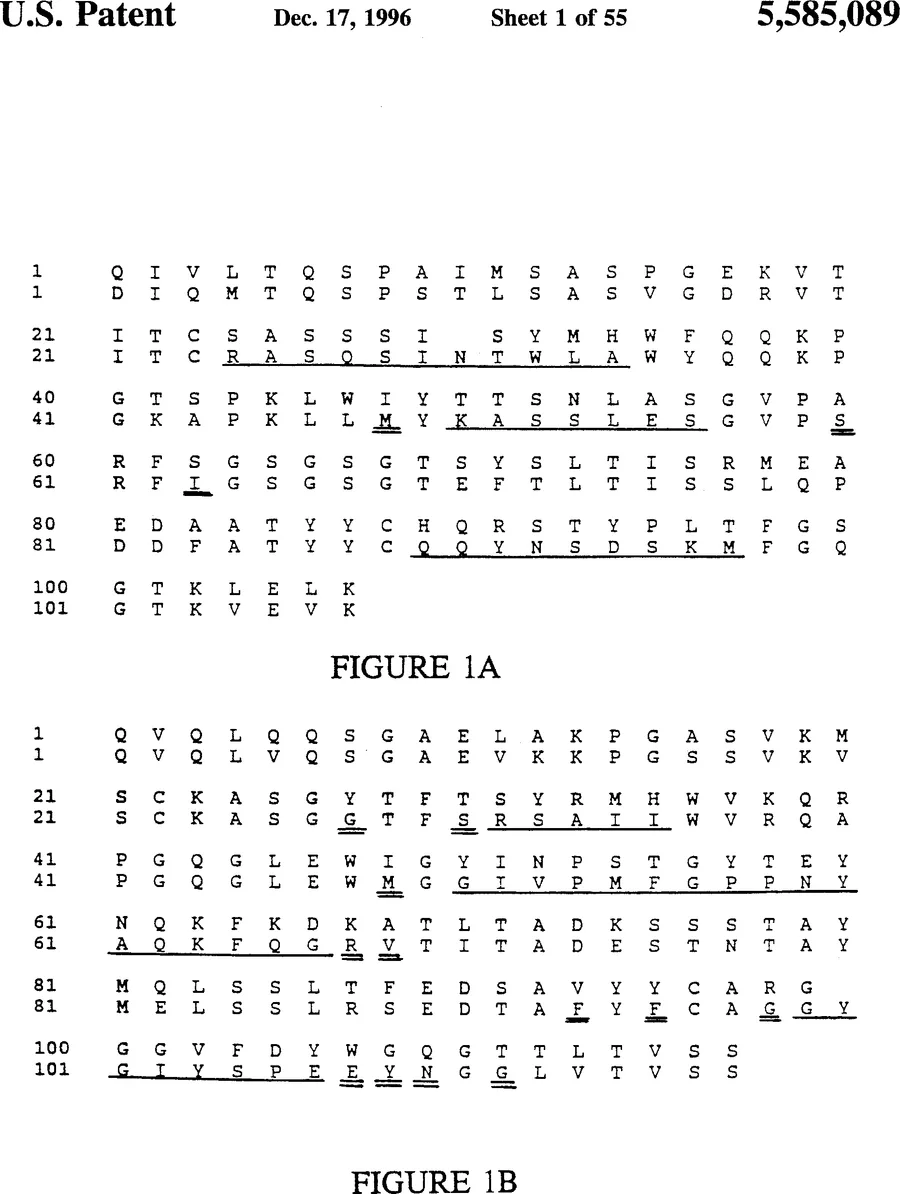
Novel methods for producing, and compositions of, humanized immunoglobulins having one or more complementarity determining regions (CDR's) and possible additional amino acids from a donor immunoglobulin and a framework region from an accepting human immunoglobulin are provided. Each humanized immunoglobulin chain will usually comprise, in addition to the CDR's, amino acids from the donor immunoglobulin framework that are, e.g., capable of interacting with the CDR's to effect binding affinity, such as one or more amino acids which are immediately adjacent to a CDR in the donor immunoglobulin or those within about about 3 Å as predicted by molecular modeling. The heavy and light chains may each be designed by using any one or all of various position criteria. When combined into an intact antibody, the humanized immunoglobulins of the present invention will be substantially non-immunogenic in humans and retain substantially the same affinity as the donor immunoglobulin to the antigen, such as a protein or other compound containing an epitope.
Chugai Pharmaceutical Co Ltd2016
12citations
67% of 1st (18)What it does
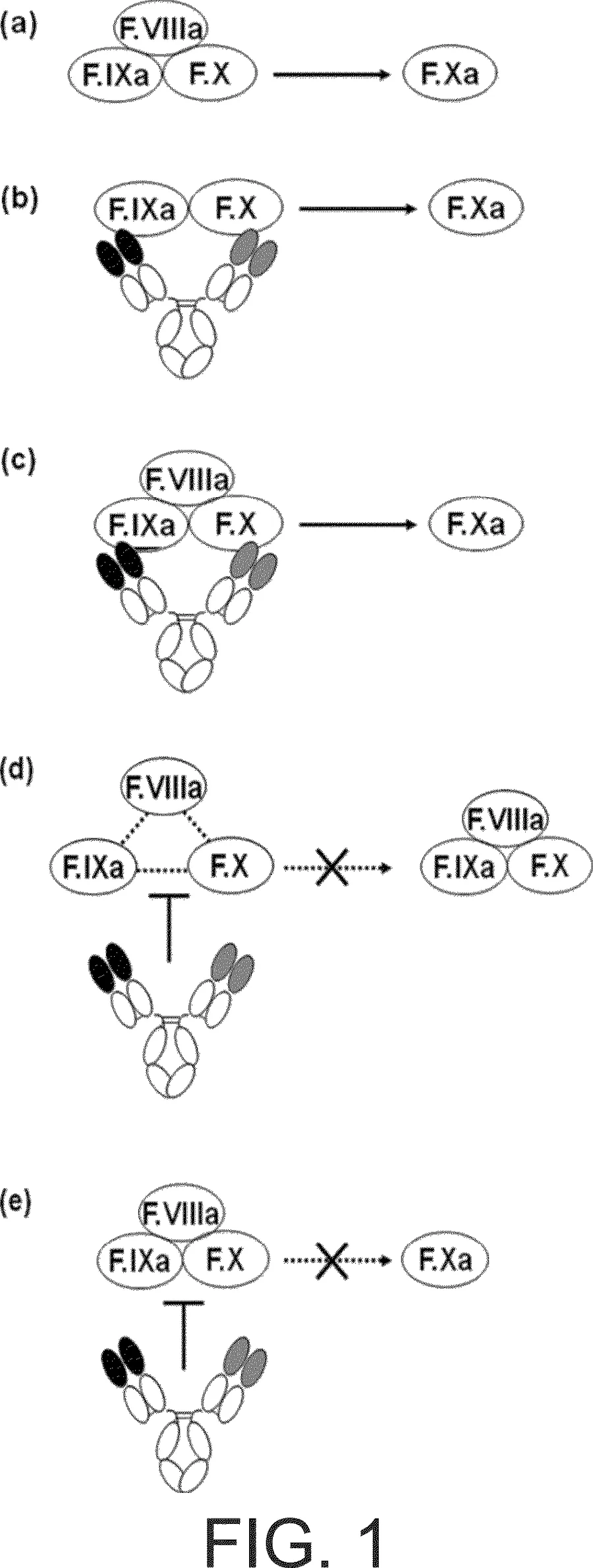
Various bispecific antibodies that specifically bind to both blood coagulation factor IX/activated blood coagulation factor IX and blood coagulation factor X and functionally substitute for the cofactor function of blood coagulation factor VIII, that is, the function to promote activation of blood coagulation factor X by activated blood coagulation factor IX, were produced. From these antibodies, multispecific antigen-binding molecules having a high activity of functionally substituting for blood coagulation factor VIII were successfully discovered.
Zoetis Services LLC2019
10citations
56% of 1st (18)What it does
A cell-based assay for assessing the functional activity of a canine or feline IL-31 inhibitor candidate is provided. Such a canine or feline IL-31 inhibitor candidate can be an isolated antibody that specifically binds to at least one of canine Interleukin-31 (IL-31) or feline IL-31. Such antibodies can be in the form of diagnostic and/or veterinary compositions useful for treating a pruritic and/or allergic condition in dogs or cats.
ZymeQuest Inc2023
7citations
39% of 1st (18)What it does
The present invention includes a spray drying disposable device for use in a spray drying system. The disposable has a spray drying head and a plasma drying chamber. The head has a spray dry nozzle assembly in fluid communication with the plasma source and the pressurized aerosol gas source. The pressurized gas flows in a vortex pattern that atomizes plasma droplets in the chamber. The head also includes a plenum has uniform air pressure of the drying gas. A baffle plate forms the floor of the plenum having drying gas jets that supply drying gas to the chamber. The atomized plasma droplets evaporate in the presence of the drying gas emitted from the jets to obtain dried plasma particles and humid air. A capture filter captures the dried plasma particles and allows the humid air to pass. The humid air passes through the gas outlet and the exhaust port.
LEAF Holdings Group LLC2022
5citations
28% of 1st (18)What it does
The disclosure relates generally to polyglutamated antifolates, formulations containing liposomes filled with alpha or D-gamma polyglutamated antifolates, methods of making the polyglutamated antifolates and liposome containing formulations, and methods of using polyglutamated antifolates and liposome containing formulations to treat hyerproliferative disorders (e.g., cancer) and disorders of the immune system (e.g., an autoimmune disease such as rheumatoid arthritis).
Axsome Therapeutics Inc2023
5citations
28% of 1st (18)What it does
Disclosed herein are compositions comprising an NSAID such as meloxicam and/or rizatriptan in combination with a cyclodextrin and/or a carbonate or a bicarbonate. These compositions may be orally administered, for example, to improve the bioavailability or pharmacokinetics of the NSAID for the treatment of pain such as migraine, arthritis, and other conditions. Also disclosed herein are methods of treating pain, such as migraine, comprising administering meloxicam and rizatriptan to a human being suffering from pain, such as migraine. For migraine, these methods may be particularly useful when the meloxicam and rizatriptan are administered while the human being is suffering from an acute attack of migraine pain or migraine aura. In some embodiments, the combination of meloxicam and rizatriptan may be administered in a manner that results in a Tmax of meloxicam of 3 hours or less.
H Lundbeck AS2023
5citations
28% of 1st (18)What it does
Methods for rapid treatment of chronic migraine are provided. Exemplary methods provide relief from migraine within 24 hours of administration. Also provided are methods for acute treatment of migraine. Exemplary methods comprise administration of an anti-CGRP antagonist antibody to a patient in need thereof.
H Lundbeck AS2023
5citations
28% of 1st (18)What it does
Methods for immediate relief of migraine or headache are provided comprising the administration of an anti-CGRP antagonist antibody to a patient in need thereof.
ZymeQuest Inc2024
5citations
28% of 1st (18)What it does
The present invention includes a spray drying disposable device for use in a spray drying system. The disposable has a spray drying head and a plasma drying chamber. The head has a spray dry nozzle assembly in fluid communication with the plasma source and the pressurized aerosol gas source. The pressurized gas flows in a vortex pattern that atomizes plasma droplets in the chamber. The head also includes a plenum has uniform air pressure of the drying gas. A baffle plate forms the floor of the plenum having drying gas jets that supply drying gas to the chamber. The atomized plasma droplets evaporate in the presence of the drying gas emitted from the jets to obtain dried plasma particles and humid air. A capture filter captures the dried plasma particles and allows the humid air to pass. The humid air passes through the gas outlet and the exhaust port.
Terns Pharmaceuticals Inc2024
5citations
28% of 1st (18)What it does
The present application provides compounds that may be used as a glucagon-like peptide-1 receptors (GLP-1R) agonist, or pharmaceutically acceptable salts thereof. Also provided are pharmaceutical compositions containing such compounds, or pharmaceutically acceptable salts thereof. Methods of preparing these compounds and compositions, and methods of using these compounds and compositions to treat or prevent a disease or a condition mediated by GLP-1R, are also provided.
The inventions companies themselves named as the foundation of their work — the market’s references.
Highlights
Genentech Inc 1989
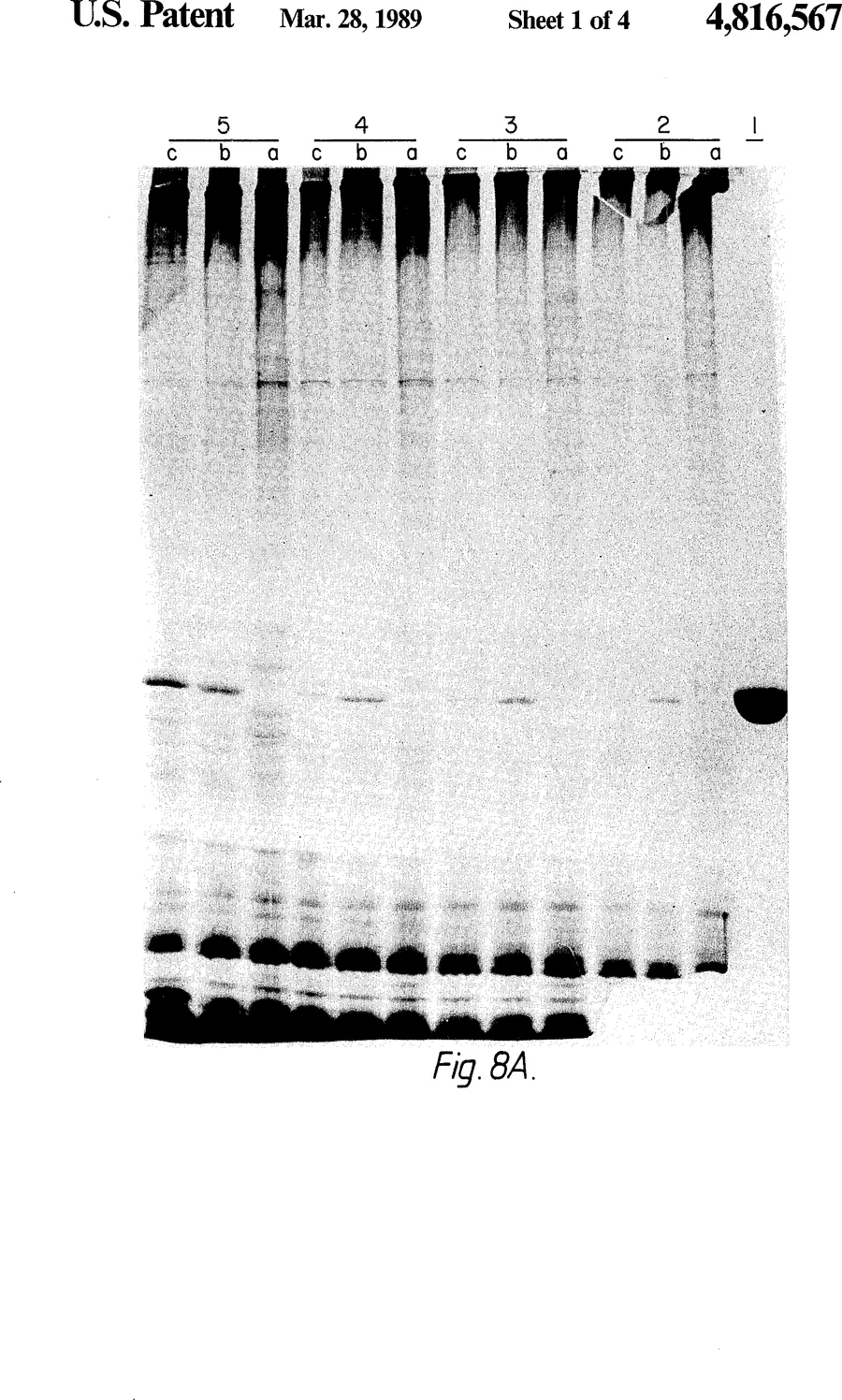
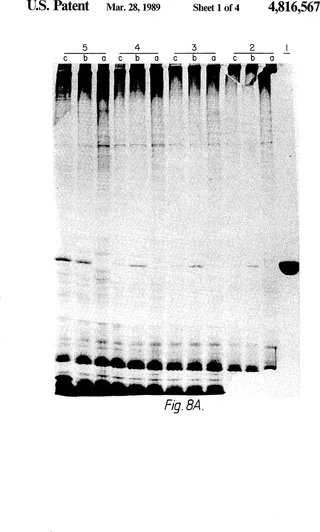
5 inventors: Shmuel Cabilly, Herbert L. Heyneker and 3 moreAltered and native immunoglobulins, including constant-variable region chimeras, are prepared in recombinant cell culture. The immunoglobulins contain variable regions which are immunologically capable of binding predetermined antigens. Methods are provided for refolding directly expressed immunoglobulins into immunologically active form.
146citations
Protein Design Labs Inc 1996
2 inventors: Cary L. Queen and 1 more132citations
Genentech Inc 2004
Inventor: Leonard PrestaFull ranking
Each number shows how many times the patent was used as a reference by new U.S. patents granted in 2025. Tap any of them to see the drawing, who invented it and what it does.
Genentech Inc1989
238citations
Top of the listWhat it does
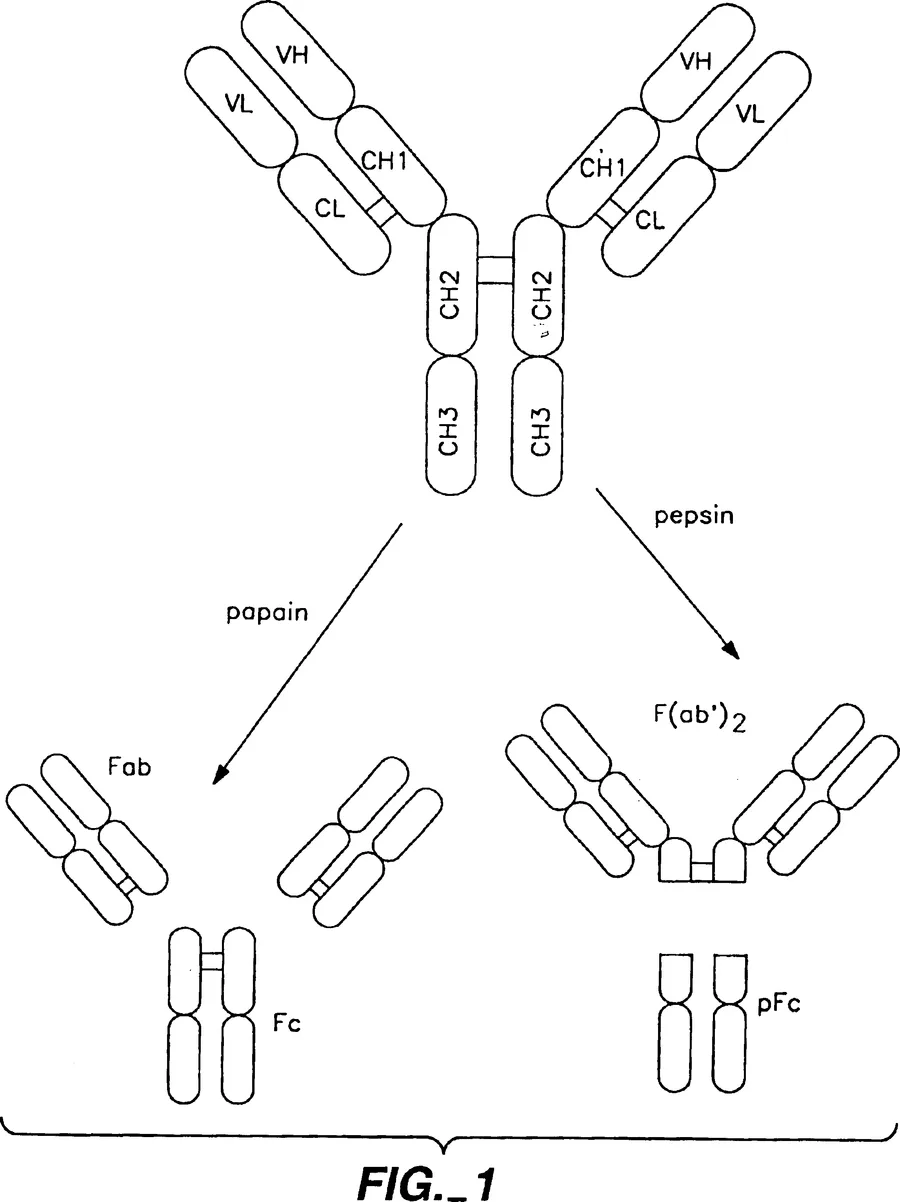
Altered and native immunoglobulins, including constant-variable region chimeras, are prepared in recombinant cell culture. The immunoglobulins contain variable regions which are immunologically capable of binding predetermined antigens. Methods are provided for refolding directly expressed immunoglobulins into immunologically active form.
Protein Design Labs Inc1996
146citations
61% of 1st (238)What it does
Novel methods for producing, and compositions of humanized immunoglobulins having one or more complementarity determining regions (CDR's) and possible additional amino acids from a donor immunoglobulin and a framework region from an accepting human immunoglobulin are provided. Each humanized immunoglobulin chain will usually comprise, in addition to the CDR's, amino acids from the donor immunoglobulin framework that are, e.g., capable of interacting with the CDR's to effect binding affinity, such as one or more amino acids which are immediately adjacent to a CDR in the donor immunoglobulin or those within about 3 Å as predicted by molecular modeling. The heavy and light chains may each be designed by using any one or all of various position criteria. When combined into an intact antibody, the humanized immunoglobulins of the present invention will be substantially non-immunogenic in humans and retain substantially the same affinity as the donor immunoglobulin to the antigen, such as a protein or other compound containing an epitope.
Genentech Inc2004
132citations
55% of 1st (238)What it does
The present invention concerns polypeptides comprising a variant Fc region. More particularly, the present invention concerns Fc region-containing polypeptides that have altered effector function as a consequence of one or more amino acid modifications in the Fc region thereof.
Ono Pharmaceutical Co Ltd2011
113citations
47% of 1st (238)What it does
The present invention provides isolated monoclonal antibodies, particularly human monoclonal antibodies, that specifically bind to PD-1 with high affinity. Nucleic acid molecules encoding the antibodies of the invention, expression vectors, host cells and methods for expressing the antibodies of the invention are also provided. Immunoconjugates, bispecific molecules and pharmaceutical compositions comprising the antibodies of the invention are also provided. The invention also provides methods for detecting PD-1, as well as methods for treating various diseases, including cancer and infectious diseases, using anti-PD-1 antibodies. The present invention further provides methods for using a combination immunotherapy, such as the combination of anti-CTLA-4 and anti-PD-1 antibodies, to treat hyperproliferative disease, such as cancer. The invention also provides methods for altering adverse events related to treatment with such antibodies individually.
Genentech Inc1998
112citations
47% of 1st (238)What it does
Variant immunoglobulins, particularly humanized antibody polypeptides are provided, along with methods for their preparation and use. Consensus immunoglobulin sequences and structural models are also provided.
Medical Research Council1993
109citations
46% of 1st (238)What it does
An altered antibody is produced by replacing the complementarity determining regions (CDRs) of a variable region of an immunoglobulin (Ig) with the CDRs from an Ig of different specificity, using recombinant DNA techniques. The gene coding sequences for producing the altered antibody may be produced by site-directed mutagenesis using long oligonucleotides.
Scotgen Biopharmaceuticals Inc1997
102citations
43% of 1st (238)What it does
An antibody with an altered function, e.g. altered affinity for an effector ligand such as Fc receptor (FcR) on a cell or the C1 component of complement is produced by replacing at least one amino acid residue in the constant portion of the antibody with a different residue.
Syntex USA LLC1985
99citations
42% of 1st (238)What it does
Serial injection of muramyldipeptides and liposomes enhances the anti-infective activity of muramyldipeptides.
Genex Corp1990
99citations
42% of 1st (238)What it does
The invention pertains to a single polypeptide chain binding molecule which has binding specificity and affinity substantially similar to the binding specificity and affinity of the light and heavy chain aggregate variable region of an antibody, to genetic sequences coding therefor, and to recombinant DNA methods of producing such molecule and uses for such molecule.
Protein Engineering Corp1993
98citations
41% of 1st (238)What it does
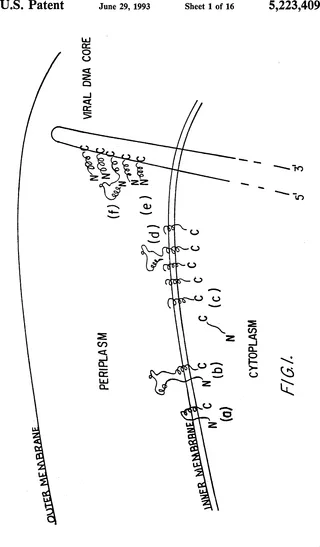
In order to obtain a novel binding protein against a chosen target, DNA molecules, each encoding a protein comprising one of a family of similar potential binding domains and a structural signal calling for the display of the protein on the outer surface of a chosen bacterial cell, bacterial spore or phage (genetic package) are introduced into a genetic package. The protein is expressed and the potential binding domain is displayed on the outer surface of the package. The cells or viruses bearing the binding domains which recognize the target molecule are isolated and amplified. The successful binding domains are then characterized. One or more of these successful binding domains is used as a model for the design of a new family of potential binding domains, and the process is repeated until a novel binding domain having a desired affinity for the target molecule is obtained. In one embodiment, the first family of potential binding domains is related to bovine pancreatic trypsin inhibitor, the genetic package is M13 phage, and the protein includes the outer surface transport signal of the M13 gene III protein.










 Biotechnology

 Organic fine chemistry

 Medical technology

 Analysis of biological materials

 Food chemistry

 Basic materials chemistry

 Macromolecular chemistry and polymers