




Citation
When a new patent lists an older one as a reference. More citations = more influence.
WIPO technology field · 2025
The 71 patents that served most often as references for new inventions in this field.
When a new patent lists an older one as a reference. More citations = more influence.
The U.S. Patent Office reviewer. Cites what is too similar to the application.
too similarThe company or inventor filing the patent. Cites what inspired their work.
inspirationThe inventions the Patent Office used most for comparison — the closest to what is being patented today.
Highlights
Topgolf Callaway Brands Corp 2022
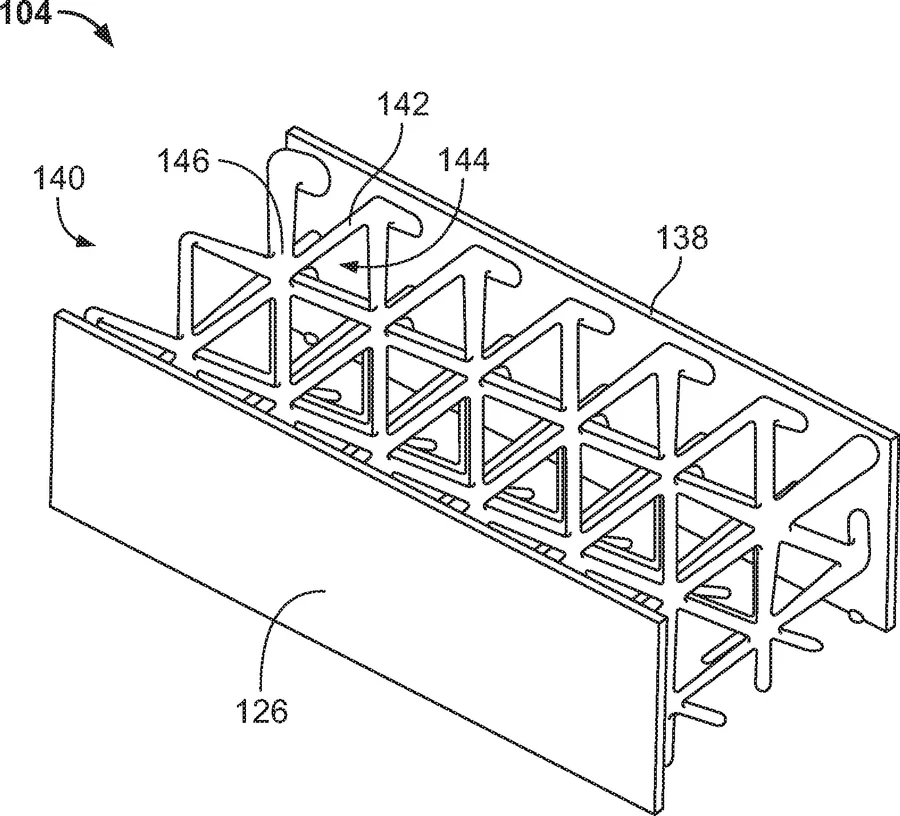
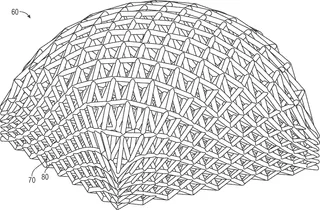
5 inventors: Brandon D. DeMille, Eric Stubben and 3 moreGolf club components with complex structures such as lattice structures, beam structures, and complex surface-based structures, are described herein. A binder jet machine is used create complex structures within these golf club components to optimize weighting, sound, and performance of golf club heads. These components may be manufactured using a method that includes the steps of designing a golf club head component in CAD using optimization software, printing the component from a powdered material, and then removing excess powder from the component via port holes that extend into an external surface of the component and communicate with interior voids within the component.
5citations
Cobra Golf Inc 2022
4 inventors: Ryan L. Roach and 3 more4citations
Southern Methodist University 2019
7 inventors: Adam Cohen and 6 moreFull ranking
Each number shows how many times the patent was used as a reference by new U.S. patents granted in 2025. Tap any of them to see the drawing, who invented it and what it does.
Topgolf Callaway Brands Corp2022
5citations
Top of the listWhat it does
Golf club components with complex structures such as lattice structures, beam structures, and complex surface-based structures, are described herein. A binder jet machine is used create complex structures within these golf club components to optimize weighting, sound, and performance of golf club heads. These components may be manufactured using a method that includes the steps of designing a golf club head component in CAD using optimization software, printing the component from a powdered material, and then removing excess powder from the component via port holes that extend into an external surface of the component and communicate with interior voids within the component.
Cobra Golf Inc2022
5citations
Top of the listWhat it does
A golf club head includes a body and an insert. The body defines a top side, a toe side, and a heel side, and includes a sole extending between the toe side and the heel side at a location on the body opposite to the top side. The body defines an internal volume defined between a ball-striking face and an internal wall. The insert is arranged within the internal volume and is formed layer by layer via an additive manufacturing process. The insert includes a lattice structure arranged between a rear surface of the ball-striking face and the internal wall. The lattice structure is in engagement with the rear surface and formed integrally with the ball-striking face and the internal wall.
Southern Methodist University2019
4citations
80% of 1st (5)What it does
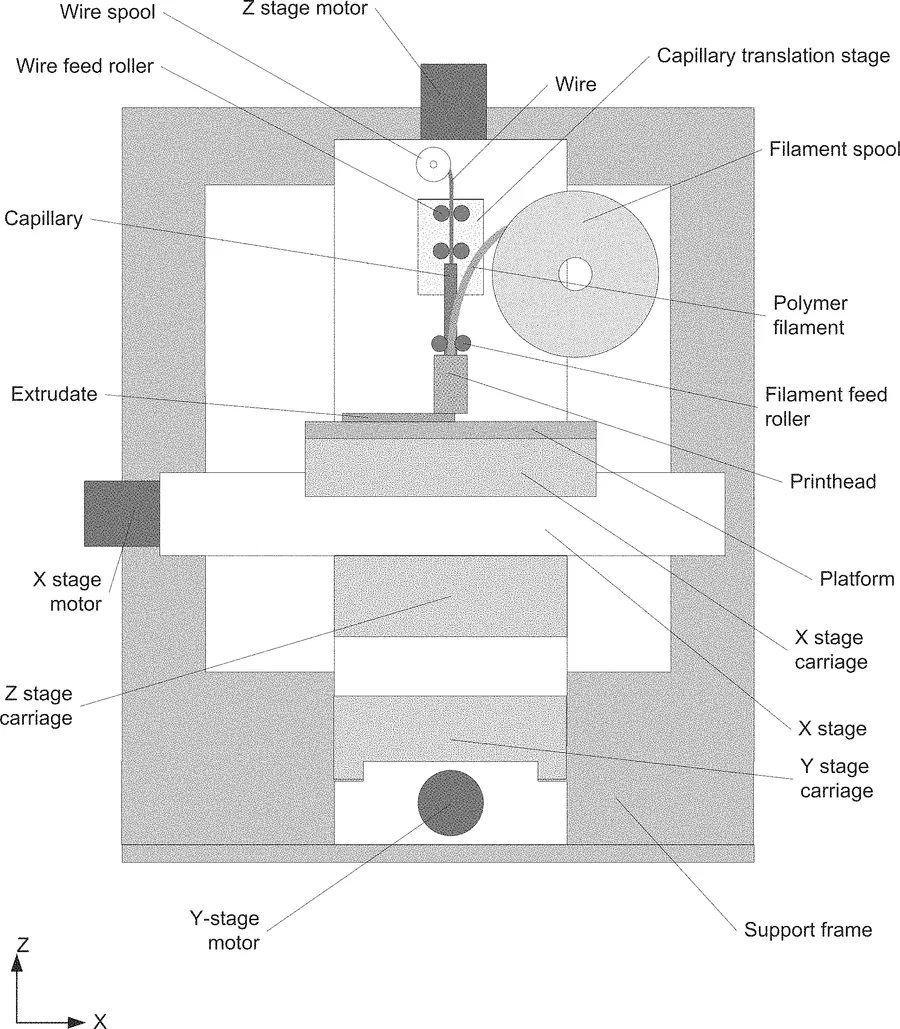
The present disclosure relates to a process, system and apparatus for multi-material additive manufacturing process comprising: extruding an extrudable material through a nozzle capable of moving along one or more axis and concurrently extruding one or more filaments, wherein the filament is embedded in, on or about the extrudable material from the nozzle.
Prince Mohammad bin Fahd University2025
4citations
80% of 1st (5)What it does
A feeder system includes a donut-ring-shaped first wheel having a first groove recessed below its top surface, with a first hopper positioned above to receive material. A first conduit connects the hopper bottom to the groove, defining a feeding path. A mixer unit receives materials, connected to the first groove via a first suction head. A first motor rotates the first wheel, transferring material from hopper to groove to mixer unit. A donut-ring-shaped second wheel includes a second groove, second hopper, and second conduit. A second suction head connects this groove to the mixer unit, while a second motor enables wheel rotation for material transfer. The mixer unit combines both materials. The feeder system implements coaxial wheel arrangement with independent material flow control, enabling independent powder delivery for additive manufacturing applications.
Eastman Kodak Co1993
4citations
80% of 1st (5)What it does
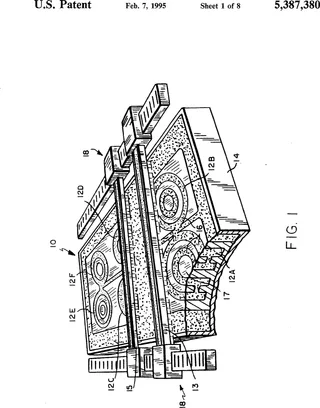
Disclosed is an interdispersed two-phase ferrite composite which comprises, as a ferromagnetic phase, a magnetically hard ferrite material having a hexagonal crystalline structure of the general formula MO.6Fe 2 O 3 in which M is selected from the group consisting of strontium, barium, lead and mixtures thereof exhibiting a coercivity of at least 300 Oersteds when magnetically saturated and an induced magnetic moment of at least 20 EMU/g when in an applied magnetic field of 1000 Oersteds and, as a ferroelectric phase, a ferroelectric material comprised of at least one of the double oxides of titanium, zirconium, tin, hafnium or germanium and either an alkaline earth or lead or cadmium, in which the mole ratio of the ferromagnetic phase to the ferroelectric phase is from about 1:1 to about 1:4. Also disclosed are carrier particles formed from magnetized particles of the composite which optionally can be polymerically coated, an electrostatic two-component dry developer composition comprising electrically insulative charged toner particles mixed with oppositely charged carrier particles formed from magnetized, and optionally polymerically coated, particles of the composite suitable for extremely high speed copying applications without the loss of copy image quality, and a method of developing an electrostatic image by contacting the image with a two-component dry developer composition described above.
Hoya Corp2003
4citations
80% of 1st (5)What it does
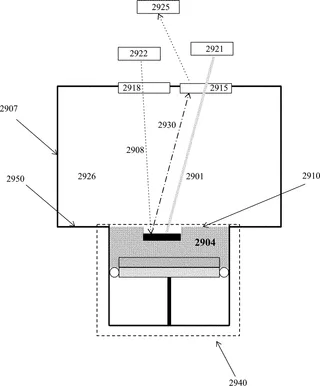
In order to prevent particles generated in the preparation of a chemically reinforcing molten salt from getting into an operation atmosphere for performing a chemical reinforcement, a chemical reinforcement tank 2 and a dissolution tank 10 for preparing the chemically reinforcing molten salt are separated from each other. In a typical embodiment, the chemical reinforcement tank is disposed in a clean room 35, and the dissolution tank 10 is disposed outside the clean room.
Asahi Fiber Glass Co Ltd2010
4citations
80% of 1st (5)What it does
A glass filler for a polycarbonate resin, whereby the refractive index of the glass filler can be improved to the same level as a polycarbonate resin, and the transparency of a molded product after reinforced with such a filler can be maintained without coloration, and a polycarbonate resin composition employing such a filler, are provided. The polycarbonate resin composition comprises a polycarbonate resin and a glass filler which comprises, as inorganic components in the entire glass filler, from 50 to 60 mass % of silicon dioxide (SiO 2 ), from 7 to 15 mass % of aluminum oxide (Al 2 O 3 ), from 10 to 20 mass % of calcium oxide (CaO), from 0 to 5 mass % of magnesium oxide (MgO), from 2 to 8 masse of zirconium is oxide (ZrO 2 ), from 0 to 10 mass % of zinc oxide (ZnO), from 0 to 10 mass % of strontium oxide (SrO), from 0 to 18 mass % of barium oxide (BaO), from 0 to 2 mass % of lithium oxide (Li 2 O), from 0 to 2 mass % of sodium oxide (Na 2 O), and from 0 to 2 mass % of potassium oxide (K 2 O), provided that the total content of the lithium oxide (Li 2 O), the sodium oxide (Na 2 O) and the potassium oxide (K 2 O) is from 0 to 2 mass % based on the entire glass filler.
Cobra Golf Inc2019
3citations
60% of 1st (5)What it does
The invention provides a golf club head with an openwork (e.g., lattice-like or trellis-like) internal structural element that provides strength and stiffening at key points of the club head and/or attenuates sound while adding little to the overall mass due to the defined or irregular patterns of holes, piercings, gaps, or apertures through surfaces of the material. A golf club head may be given an openwork internal rib that reinforces regions of high strain, thereby minimizing material fatigue and preventing early breakage of the club head.
Vitro Flat Glass LLC2019
3citations
60% of 1st (5)What it does
A solar control coating includes at least four phase adjustment layers and at least four metal functional layers. At least one of the metal functional layers can be a continuous layer. At least one of the metal functional layers can be a subcritical layer. The solar control coating provides reference IGU values of luminous transmittance no greater than 64%, SHGC of no greater than 0.5, and LSG of at least 1.85.
Corning Inc2019
3citations
60% of 1st (5)What it does
Embodiments of a glass substrate including an alkali-containing bulk and an alkali-depleted surface layer, including a substantially homogenous composition are disclosed. In some embodiments, the alkali-depleted surface layer includes about 0.5 atomic % alkali or less. The alkali-depleted surface layer may be substantially free of hydrogen and/or crystallites. Methods for forming a glass substrate with a modified surface layer are also provided.
Topgolf Callaway Brands Corp2020
3citations
60% of 1st (5)What it does
A golf club head, preferably a putter head, comprising at least one structural support member is disclosed herein. The structural support member has a smooth, organic-looking aesthetic, with a continuously changing curvature along its spline and at least one surface, and preferably connects one portion of the golf club head to another portion. Where the support member connects to other portions of the golf club head, the surfaces of the member have a curvature that changes smoothly and continuously, lacking any sharp corners.
Saudi Arabian Oil Co2022
3citations
60% of 1st (5)What it does
According to one or more embodiments, presently disclosed are processes for producing petrochemical products from a hydrocarbon material. The process may include separating the hydrocarbon material into at least a lesser boiling point fraction and a greater boiling point fraction, cracking at least a portion of the greater boiling point fraction in the presence of a first catalyst in an environment comprising less than 0.1 mol. % water to produce a first cracking reaction product, combining steam with the lesser boiling point fraction upstream of the cracking of the lesser boiling point fraction, cracking at least a portion of the lesser boiling point fraction in the presence of a second catalyst to produce a second cracking reaction product, and separating the petrochemical products from one or both of the first cracking reaction product or the second cracking reaction product.
Nant Holdings IP LLC2022
3citations
60% of 1st (5)What it does
Methods and systems for separating a first metal from a metal-containing feed stream are provided. The method can include applying solar energy, for example, by focusing one or more mirrors in one or more heliostats, to heat a metal-containing feed stream in a heating zone to a first temperature to produce a first vapor including the first metal. The first vapor can be condensed in a condensation zone to produce a first liquid including the first metal, and the first liquid can be collected. The system can include a separation unit include a heating zone in fluid communication with a condensation zone and a means for applying solar energy to heat a metal-containing feed stream disposed in the heating zone.
Iogen Corp2022
3citations
60% of 1st (5)What it does
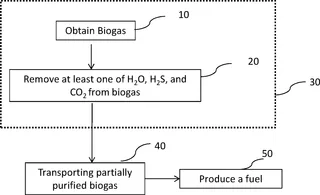
A method for providing a fuel includes providing a partially purified biogas at a first processing site, where the partially purified biogas is produced by multiple biogas sources and/or from multiple feedstock sources. The partially purified biogas is compressed, fed to a mobile tank, and transported by vehicle to a second processing site. At the second processing site, which may also receive biogas from a plurality of biogas sources, the partially purified biogas is further processed to produce a fuel or fuel intermediate.
Saudi Arabian Oil Co2022
3citations
60% of 1st (5)What it does
According to one more embodiments, presently disclosed are processes for producing petrochemical products from a hydrocarbon material. The process may include separating the hydrocarbon material into at least a lesser boiling point fraction and a greater boiling point fraction, combining steam with the greater boiling point fraction upstream of the cracking of the greater boiling point fraction, cracking at least a portion of the greater boiling point fraction in the presence of a first catalyst to produce a first cracking reaction product, combining steam with the lesser boiling point fraction upstream of the cracking of the lesser boiling point fraction, cracking at least a portion of the lesser boiling point fraction in the presence of a second catalyst to produce a second cracking reaction product, and separating the petrochemical products from one or both of the first cracking reaction product or the second cracking reaction product.
Saudi Arabian Oil Co2022
3citations
60% of 1st (5)What it does
According to one or more embodiments, presently disclosed are processes for producing petrochemical products from a hydrocarbon material. The process may include separating the hydrocarbon material into at least a lesser boiling point fraction and a greater boiling point fraction, cracking at least a portion of the greater boiling point fraction, cracking at least a portion of the lesser boiling point fraction, separating cycle oil from one or both of the first cracking reaction product or the second cracking reaction product, hydrotreating the cycle oil to form a hydrotreated cycle oil, and recycling the hydrotreated cycle oil.
Saudi Arabian Oil Co2022
3citations
60% of 1st (5)What it does
A steam-assisted catalytic cracking process for a hydrocarbon feed is provided. The process includes: introducing the hydrocarbon feed, a fluid catalytic cracking (FCC) catalyst, and steam to a FCC reactor with a mass ratio of steam to hydrocarbon feed between 0.05 and 1.0; cracking the hydrocarbon feed in the presence of the FCC catalyst and steam to produce a cracked hydrocarbon feed and spent FCC catalyst, the spent FCC catalyst comprising coke deposits and hydrocarbon deposits; stripping the hydrocarbon deposits from the spent FCC catalyst with steam in a stripper to obtain a hydrocarbon-stripped spent FCC catalyst; regenerating the hydrocarbon-stripped spent FCC catalyst in a regenerator by subjecting the stripped spent FCC catalyst to heat in the presence of oxygen to combust the coke deposits on the stripped spent FCC catalyst and produce a regenerated FCC catalyst; recycling the regenerated FCC catalyst.
Topgolf Callaway Brands Corp2022
3citations
60% of 1st (5)What it does
A golf club head, preferably a putter head, comprising at least one structural support member is disclosed herein. The structural support member has a smooth, organic-looking aesthetic, with a continuously changing curvature along its spline and at least one surface, and preferably connects one portion of the golf club head to another portion. Where the support member connects to other portions of the golf club head, the surfaces of the member have a curvature that changes smoothly and continuously, lacking any sharp corners. The support member may be part of a lattice structure formed via binder jetting.
PostProcess Technologies Inc2022
3citations
60% of 1st (5)What it does
Apparatuses and methods for removing support material from and/or smoothing surfaces of an additive-manufactured part are disclosed. Apparatuses may include a spraying chamber, a support surface within the spraying chamber, and one or more nozzles having the ability to spray a fluid at the additive-manufactured parts. The fluid may include a liquid and solid particles carried by the liquid. The support surface may have the ability to support the additive manufactured part. The apparatus may include a tank having the ability to hold at least some of the fluid. A heater may be included for heating the fluid to a desired temperature.
Topgolf Callaway Brands Corp2022
3citations
60% of 1st (5)What it does
Methods of creating golf products with complex structures that would be difficult, impossible, or cost prohibitive to produce, such as lattice structures, beam structures, and complex surface-based structures, and golf products that are created using those methods, are described herein. The structures described herein may be made from metal, non-metal materials, or combinations thereof, and may have one or more portions that are made from transparent or translucent materials.
Topgolf Callaway Brands Corp2023
3citations
60% of 1st (5)What it does
Methods of creating golf club components with complex structures that would be difficult, impossible, or cost prohibitive to produce, such as lattice structures, beam structures, and complex surface-based structures, are described herein. In particular, a binder jet machine is used create complex structures to optimize weighting, sound, and performance of golf club heads. The method preferably includes the steps of designing a golf club head component in CAD using optimization software, printing the component from a powdered material, and then removing excess powder from the component via port holes that extend into an external surface of the component and communicate with interior voids within the component.
Sixring Inc2023
3citations
60% of 1st (5)What it does
Method for controlled delignification of lignocellulosic feedstock, said method comprising the steps of:providing a reactive phase of pH less than 1, said reactive phase comprising:water;sulfuric acid;a source of peroxide;a modifying agent, said modifying agent adapted to control the reactivity of the sulfuric acid;providing a holding phase, said holding phase comprising an organic solvent which does not react with the aqueous acidic composition;combining said reactive phase and holding phase to form a reaction mixture;exposing a lignocellulosic material to said reaction mixture for a period of time sufficient to allow delignification of the lignocellulosic material.
Nant Holdings IP LLC2023
3citations
60% of 1st (5)What it does
Methods and systems for separating a first metal from a metal-containing feed stream are provided. The method can include applying solar energy, for example, by focusing one or more mirrors in one or more heliostats, to heat a metal-containing feed stream in a heating zone to a first temperature to produce a first vapor including the first metal. The first vapor can be condensed in a condensation zone to produce a first liquid including the first metal, and the first liquid can be collected. The system can include a separation unit include a heating zone in fluid communication with a condensation zone and a means for applying solar energy to heat a metal-containing feed stream disposed in the heating zone.
Sixring Inc2023
3citations
60% of 1st (5)What it does
Method of delignification of plant material, said method comprising:providing said plant material comprising cellulose fibres and lignin;exposing said plant material requiring to a composition comprising:an acid;a modifiying agent selected from the group consisting of: sulfamic acid; imidazole; N-alkylimidazole; taurine; a taurine derivative; a taurine-related compound; alkylsulfonic acid; arylsulfonic acid; triethanolamine; and combinations thereof;a metal oxide; anda peroxide;for a period of time sufficient to remove substantially all (at least 80%) of the lignin present on said plant material.
Nant Holdings IP LLC2023
3citations
60% of 1st (5)What it does
Methods and systems for separating a first metal from a metal-containing feed stream are provided. The method can include applying solar energy, for example, by focusing one or more mirrors in one or more heliostats, to heat a metal-containing feed stream in a heating zone to a first temperature to produce a first vapor including the first metal. The first vapor can be condensed in a condensation zone to produce a first liquid including the first metal, and the first liquid can be collected. The system can include a separation unit include a heating zone in fluid communication with a condensation zone and a means for applying solar energy to heat a metal-containing feed stream disposed in the heating zone.
Saudi Arabian Oil Co2023
3citations
60% of 1st (5)What it does
An integrated process for upgrading a hydrocarbon oil feed stream utilizing a gasification unit and steam enhanced catalytic cracker includes solvent deasphalting the hydrocarbon oil stream to form at least a deasphalted oil stream and heavy residual hydrocarbons, the heavy residual hydrocarbons including at least asphaltenes; processing the heavy residual hydrocarbons in a gasification unit to form syngas and gasification residue; hydrotreating the deasphalted oil stream to form a light C5+ hydrocarbon stream, and a heavy C5+ hydrocarbon stream; steam enhanced catalytically cracking the light C5+ hydrocarbon stream to form a light steam enhanced catalytically cracked product stream including olefins, benzene, toluene, xylene, naphtha, or combinations thereof; and steam enhanced catalytically cracking the heavy C5+ hydrocarbon stream to form a heavy steam enhanced catalytically cracked product including olefins, benzene, toluene, xylene, naphtha, or combinations thereof.
Topgolf Callaway Brands Corp2024
3citations
60% of 1st (5)What it does
Methods of creating golf club components with complex structures that would be difficult, impossible, or cost prohibitive to produce, such as lattice structures, beam structures, and complex surface-based structures, are described herein. In particular, a binder jet machine is used create complex structures to optimize weighting, sound, and performance of golf club heads. The method preferably includes the steps of designing a golf club head component in CAD using optimization software, printing the component from a powdered material, and then removing excess powder from the component via port holes that extend into an external surface of the component and communicate with interior voids within the component.
Sixring Inc2024
3citations
60% of 1st (5)What it does
A process to separate lignin from a lignocellulosic feedstock, said process comprising the steps of: providing said lignocellulosic feedstock; providing a composition comprising; an acid; a modifying agent selected from the group consisting of: sulfamic acid; imidazole; imidazole derivatives; taurine; a taurine derivative; a taurine-related compound; alkylsulfonic acid; arylsulfonic acid; triethanolamine; and combinations thereof; a peroxide salt; and a peroxide; exposing said lignocellulosic feedstock to said composition for a period of time sufficient to depolymerize substantially all of the lignin present in said lignocellulosic feedstock into lignin oligomers and lignin monomers; wherein said process is carried out at atmospheric pressure.
Sixring Inc2024
3citations
60% of 1st (5)What it does
A process to delignify biomass, said process comprising the steps of: providing a vessel; providing biomass comprising lignin, hemicellulose and cellulose fibers into said vessel; providing a aqueous acidic composition comprising a sulfuric acid component; providing a peroxide component; exposing said biomass to said sulfuric acid component and peroxide component, creating a reaction mass; allowing said sulfuric acid component and peroxide component to come into contact with said biomass for a period of time sufficient to a delignification reaction to occur and remove over 90 wt % of said lignin and hemicellulose from said biomass; and controlling the temperature of the delignification reaction to maintain it below 55° C.
Sixring Inc2024
3citations
60% of 1st (5)What it does
Method of delignification of plant material, said method comprising:providing said plant material comprising cellulose fibres and lignin;exposing said plant material requiring to a composition comprising:an acid;a modifying agent selected from the group consisting of: sulfamic acid; imidazole; N-alkylimidazole derivative; taurine; a taurine derivative; a taurine-related compound; alkylsulfonic acid; arylsulfonic acid; triethanolamine; and combinations thereof;a metal oxide; anda peroxide;adding an organic solvent to the resulting mixture;allowing a delignification reaction to occur for a period of time sufficient to remove at least 80% of the lignin present on said plant material.
Sixring Inc2024
3citations
60% of 1st (5)What it does
Method of delignification of plant material, said method comprising:providing said plant material comprising cellulose fibres and lignin;exposing said plant material requiring to a composition comprising:an acid;a modifying agent selected from the group consisting of: sulfamic acid; imidazole; taurine; a taurine derivative; a taurine-related compound; alkylsulfonic acid; aryl sulfonic acid; triethanolamine; and combinations thereof;a metal salt; anda peroxide;for a period of time sufficient to remove substantially all (at least 80%) of the lignin present on said plant material.
Ammonia Casale SA1938
3citations
60% of 1st (5)Phillips Petroleum Co1947
3citations
60% of 1st (5)Brockway Glass Co Inc1966
3citations
60% of 1st (5)Universal Oil Products Co1968
3citations
60% of 1st (5)EI Du Pont de Nemours and Co1972
3citations
60% of 1st (5)What it does
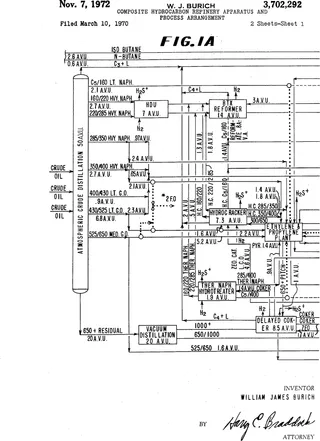
A HIGHLY INTEGRATED CRUDE OIL REFINERY ARRANGEMENT FOR PRODUCING FUEL AND CHEMICAL PRODUCTS, INVOLVING CRUDE OIL DISTILLATION MEANS, HYDROCRACKING MEANS, DELAYED COKING MEANS, REFORMING MEANS, ETHYLENE AND PROPYLENE PRODUCING MEANS COMPRISING A PYROLYSIS STEAM CRACKING UNIT AND A PYROLYSIS PRODUCTS SEPARATION UNIT, CATALYTIC CRACKING MEANS, AROMATIC PRODUCT RECOVERY MEANS, BUTADIENE RECOVERY MEANS AND ALKYLATION MEANS IN A HIGHLY FLEXIBLE, CLOSELY CONTROLLED AND INTER-RELATED SYSTEM TO PRODUCE A HIGH CONVERSION OF CRUDE OIL TO CHEMICALS OF AS HIGH AS ABOUT 50% AND A CONVERSION OF CRUDE OIL TO GASOLINE AND JET FUEL AS LOW AS ABOUT 50% FOR A MAXIMUM VALUE COMBINATION OF WIDELY VARIED PRODUCTS.
Texaco Inc1974
3citations
60% of 1st (5)What it does
Low octane naphtha and fresh gas oil are catalytically cracked with a zeolite catalytic cracking catalyst in separate elongated reaction zones yielding a naphtha having an increased octane rating. Recovering a naphtha fraction, particularly a heavy naphtha fraction, from the cracked product, and combining it with the fresh naphtha feed, further enhances the octane rating of the naphtha product. A cycle gas oil may be recovered from the reactor effluent and combined with the fresh naphtha feed or introduced into a separate (a third) elongated reaction zone to effect maximum recovery of naphtha and lighter stocks having improved product quality. Optionally, any of the feedstocks may be subjected to further cracking in a dense bed of the zeolite catalyst.
BP PLC1978
3citations
60% of 1st (5)What it does
This invention relates to a method of producing olefins from a wax distillate feed by cracking the feed in the presence of steam at a catalyst temperature of between 650° and 900° C over a manganese catalyst.
Nippon Steel Corp1996
3citations
60% of 1st (5)What it does
A grain oriented silicon steel sheet having excellent primary glass film property and magnetic property, comprising 2.0 to 5.0% by weight of Si, wherein a primary glass film formed during secondary recrystallization annealing is composed mainly of forsterite (Mg 2 SiO 4 ) and an oxide containing Al, mainly of spinel (MgAl 2 O 4 ), or Al and Si, mainly of cordierite (MgO 2 Al 4 Si 5 O 18 ) and/or sapphirine (Mg 4 Al 10 Si 2 O 23 ), and in an analysis of the surface of the steel sheet by glow discharge optical emission spectrometry analysis (GDS analysis), a peak derived from Al is separated from a peak derived from Mg, and, preferably, the peak derived from Al is separated from the peak derived from Mg and the distance (time) from the surface of the steel sheet at which the peak derived from Al is 1.2 times or more the distance from the surface of the steel sheet at which the peak derived from Mg appears.
Kawasaki Steel Corp1998
3citations
60% of 1st (5)What it does
Grain-oriented electrical steel sheet having a very low iron loss with controlled area ratio of fine grains, average grain size of coarse grains, obliquity of the grain boundary line of coarse grains, permeability under 1.0 T, and film tension.
Franco Belge de Fabrication de Combustible FBFC2000
3citations
60% of 1st (5)What it does
The conversion apparatus comprises in succession: a reactor provided with injectors of UF 6 , steam, and nitrogen so as to cause UO 2 F 2 to be formed by hydrolysis; a rotary tubular pyrohydrolysis furnace for transforming UO 2 F 2 into uranium oxide, and provided with heaters distributed in at least five zones; and a tail end for conditioning the oxide powder. The injectors comprise three concentric nozzles connected respectively to inlets for UF 6 , nitrogen, and steam, UF 6 being fed to the central nozzle and nitrogen being injected between UF 6 and steam.
Penn State Research Foundation2001
3citations
60% of 1st (5)What it does
Improved Ni, Fe and Co based superalloys having excellent oxidation resistance and weldability. The superalloys are obtained by at least partially replacing the Ni in conventional superalloys with Pd. The alloys may also contain strengtheners and modifiers such as Co, W, Mo, V, Ti, Re, Ta, Nb, C, B, Zr, Y, and Hf. The superalloy has good strength, improved weldability and excellent oxidation resistance suitable for use in many aerospace and power generation turbine applications. A preferred embodiment comprises (in wt %) 1-9% (Al+Ti), 0-0.01% B, 0-0.15% C, 0-25% Co, 5-30% Cr, 0-10% Fe, 0-0.009% (Hf+Y+Sc), 1-15% (Mo+W), 0-8% (Nb+Ta), 40-68% Ni, 4-32% Pd, 0-10% (Re+Rh), 0-5% V, and 0-0.015% Zr.
Rolls Royce PLC2001
3citations
60% of 1st (5)What it does
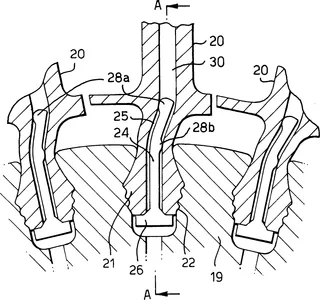
An aerofoil blade damper comprising an elongate member which is inserted within a core passage of the blade and extends within the blade with the damper retained therein at one end which is closest to the blade root with the remainder of the damper free to move relative to and within the passage; such movement generating friction which dissipates any vibration. The damper comprises a plate insert including at least two discrete substantially oppositely directed contact regions which are arranged, in use, to frictionally engage the passage. The discrete contact regions may be provided by protrusions in the form of contact pads or arms extending from the plate or be provided by the corrugations of the plate. A contact load on the contact regions is provided by the resilience of the damper, an interference fit of the damper and/or centrifugal loading of the damper and contact regions during operation.
Acciai Speciali Terni SpA2002
3citations
60% of 1st (5)What it does
By forming, after the annealing of the continuously cast body, a limited number of precipitates apt to the control of the grain growth, and utilising a cold rolling reduction ratio of at least 70%, it is possible to obtain in a subsequent step of continuous nitriding the direct formation of nitrides useful for the grain growth control and subsequently, still in a continuous treatment, to at least start the oriented secondary recrystallization.
Ellycrack AS2003
3citations
60% of 1st (5)What it does
A catalytic cracking process is described wherein the cracking takes place in a reactor under the influence of a rotating fluidized bed catalyst and compressed gases and/or steam is injected in order to effect movement of the catalyst bed.
UOP LLC2004
3citations
60% of 1st (5)What it does
Enabling a transalkylation process to handle both C 10 alkylaromatics and unextracted toluene permits the following improvements to be realized. No longer extracting toluene allows a reformate-splitter column to be eliminated. The extraction unit can be moved to the overhead of a benzene column. No longer requiring a rigorous split between C 9 and C 10 alkylaromatics allows a heavy aromatics column to be eliminated. Such an enabled transalkylation process requires stabilization of a transalkylation catalyst through the introduction of a metal function. A further enhancement to the flow scheme is accomplished through the elimination of clay treaters in favor of selective olefin saturation at the exits of a reforming unit and an isomerization unit. These improvements result in an aromatics complex with savings on inside battery limits curve costs and an improvement on the return on investment in such a complex.
Southern Methodist University2006
3citations
60% of 1st (5)What it does
A powder delivery system for a laser-based additive manufacturing process includes a hopper adapted to contain a powder and continuously feed the powder through an output of the hopper, a rotatable disk having a top surface that is substantially flat, the top surface adapted to receive the powder continuously fed through the output of the hopper, the top surface being disposed below the output of the hopper by a prescribed gap, and a vacuum powder removal device operable to remove the powder from the top surface via a vacuum.
Denso Ten Ltd2008
3citations
60% of 1st (5)What it does
A heating system for liquefied gas fuel supply apparatus is applied to a liquefied gas fuel supply apparatus that causes a vaporizer to vaporize liquefied gas fuel and supplies the vaporized fuel to an internal combustion engine, the heating system including a circulation circuit and a heat insulating container. The circulation circuit circulates a heating medium between the vaporizer and an inside of the internal combustion engine. And, the heat insulating container stores the heating medium. In this case, the heat insulating container is disposed in the circulation circuit.
Aleris Aluminum Koblenz GmbH2009
3citations
60% of 1st (5)What it does
A method for producing an integrated monolithic aluminum structure, including the steps of: (a) providing an aluminum alloy plate from an aluminum alloy with a predetermined thickness (y), (b) shaping or forming the alloy plate to obtain a predetermined shaped structure, (c) heat-treating the shaped structure, (d) machining, e.g. high velocity machining, the shaped structure to obtain an integrated monolithic aluminum structure.
Retriev Technologies Inc2014
3citations
60% of 1st (5)What it does
The present invention related to a method for the recycling of batteries by recovering and regenerating the cathode material. The method includes the steps of isolating the cathode particles and then regenerating the cathode particles for use in the same type of battery.
3M Innovative Properties Co2018
3citations
60% of 1st (5)What it does
The invention relates to kit of parts comprising a solution, a porous zirconia article, optionally application equipment, the solution comprising cation(s) of non-coloring agent(s) selected from ions of Y, Gd, La, Yb, Tm, Mg, Ca and mixtures thereof, solvent(s) for the ion(s), optionally complexing agent(s), optionally thickening agent(s), optionally organic marker substance(s), optionally additive(s), the porous zirconia article showing a N2 adsorption and/or desorption of isotherm type IV according to IUPAC classification. The invention also relates to a method for enhancing the translucency of a zirconia article comprising the steps of providing a porous zirconia article and a solution, applying the solution to at least a part of the outer surface of the porous zirconia article, optionally drying the porous zirconia article of the preceding step, sintering the porous zirconia article to obtain a zirconia ceramic article.
The inventions companies themselves named as the foundation of their work — the market’s references.
Highlights
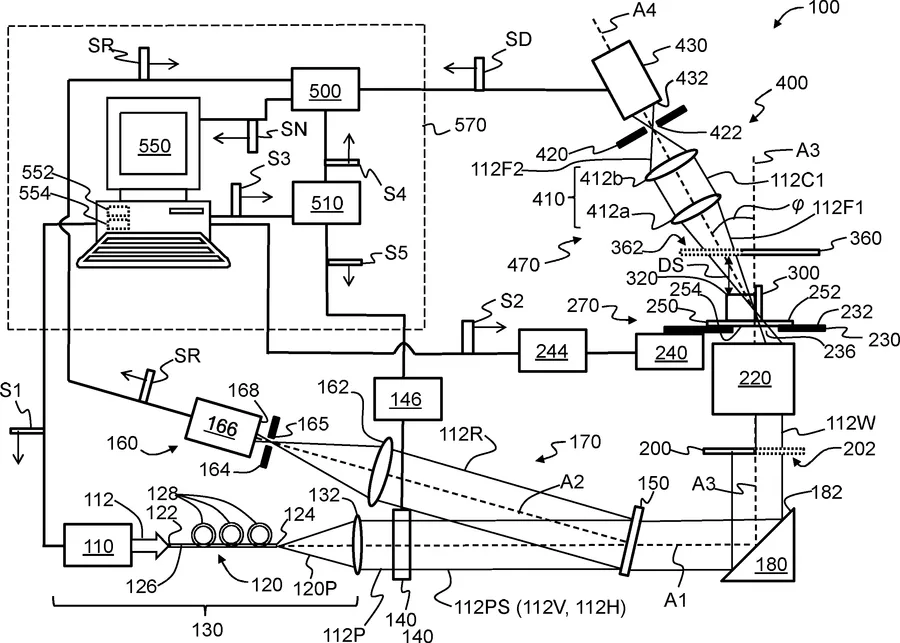
Corning Inc 2014
2 inventors: Norman Henry Fontaine and Vitor Marino SchneiderSystems and methods for measuring a profile of a glass sample ( 300 ) are disclosed. The method includes scanning a polarization-switched light beam ( 112 PS) through the glass sample and a reference block ( 320 ) for different depths into the glass sample to define a transmitted polarization-switched light beam. The method also includes measuring an amount of power in the polarization-switched light beam to form a polarization-switched reference signal (SR), and detecting the transmitted polarization-switched light beam to form a polarization-switched detector signal (SD). The method further includes dividing the polarization-switched detector signal by the polarization-switched reference signal to define a normalized polarization-switched detector signal (SN). Processing the normalized polarization-switched detector signal determines the profile characteristic.
26citations
Velo3D Inc 2018
4 inventors: Benyamin Buller and 3 more25citations
PPG Industries Inc 1969
2 inventors: Arnold E. Saunders and 1 moreFull ranking
Each number shows how many times the patent was used as a reference by new U.S. patents granted in 2025. Tap any of them to see the drawing, who invented it and what it does.
Corning Inc2014
27citations
Top of the listWhat it does
Systems and methods for measuring a profile of a glass sample ( 300 ) are disclosed. The method includes scanning a polarization-switched light beam ( 112 PS) through the glass sample and a reference block ( 320 ) for different depths into the glass sample to define a transmitted polarization-switched light beam. The method also includes measuring an amount of power in the polarization-switched light beam to form a polarization-switched reference signal (SR), and detecting the transmitted polarization-switched light beam to form a polarization-switched detector signal (SD). The method further includes dividing the polarization-switched detector signal by the polarization-switched reference signal to define a normalized polarization-switched detector signal (SN). Processing the normalized polarization-switched detector signal determines the profile characteristic.
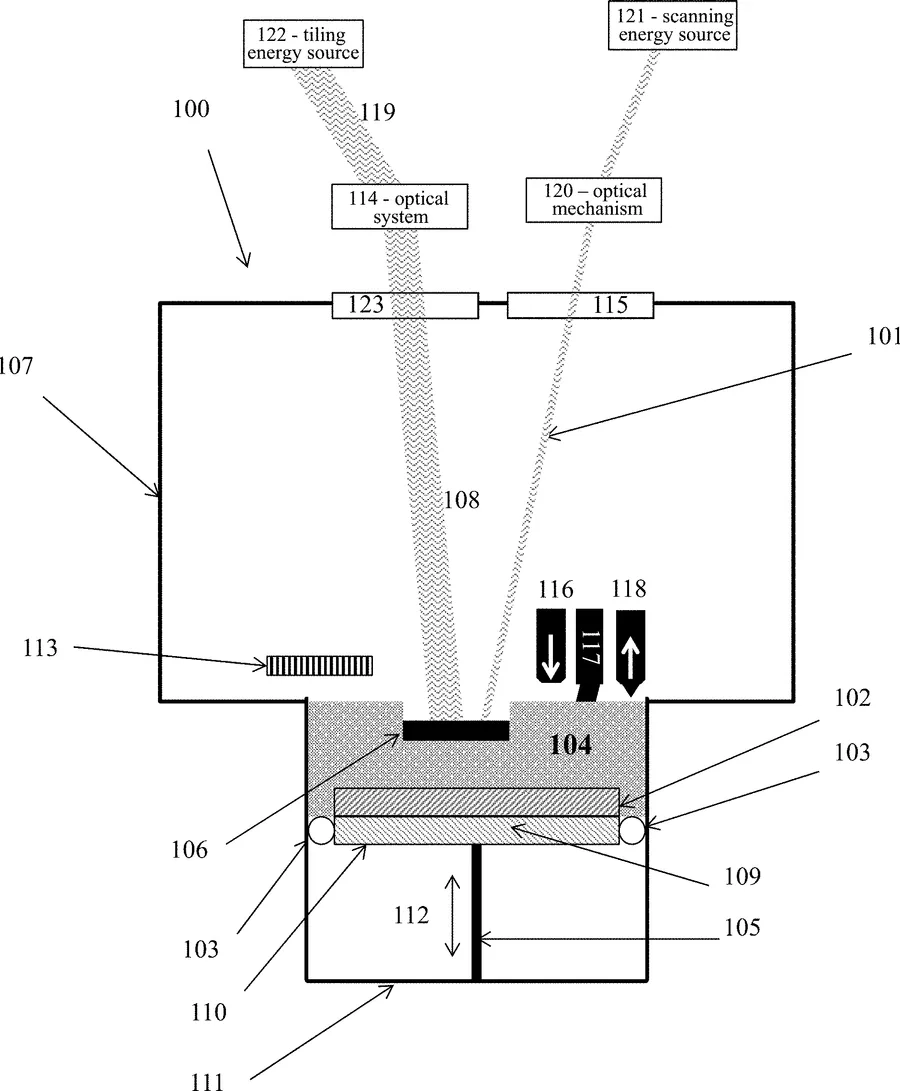
Velo3D Inc2018
26citations
96% of 1st (27)What it does
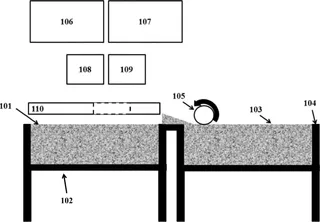
The present disclosure various apparatuses, and systems for 3D printing. The present disclosure provides three-dimensional (3D) printing methods, apparatuses, software and systems for a step and repeat energy irradiation process; controlling material characteristics and/or deformation of the 3D object; reducing deformation in a printed 3D object; and planarizing a material bed.
PPG Industries Inc1969
25citations
93% of 1st (27)Southern Methodist University2019
21citations
78% of 1st (27)What it does
The present disclosure relates to a process, system and apparatus for multi-material additive manufacturing process comprising: extruding an extrudable material through a nozzle capable of moving along one or more axis and concurrently extruding one or more filaments, wherein the filament is embedded in, on or about the extrudable material from the nozzle.
Markforged Inc2015
21citations
78% of 1st (27)What it does
Various embodiments related to three dimensional printers, and reinforced filaments, and their methods of use are described. In one embodiment, a void free reinforced filament is fed into an conduit nozzle. The reinforced filament includes a core, which may be continuous or semi-continuous, and a matrix material surrounding the core. The reinforced filament is heated to a temperature greater than a melting temperature of the matrix material and less than a melting temperature of the core prior to drag the filament from the conduit nozzle.
Velo3D Inc2016
21citations
78% of 1st (27)What it does
The present disclosure provides three-dimensional (3D) objects, 3D printing processes, as well as methods, apparatuses and systems for the production of a 3D object. Methods, apparatuses and systems of the present disclosure may reduce or eliminate the need for auxiliary supports. The present disclosure provides three dimensional (3D) objects printed utilizing the printing processes, methods, apparatuses and systems described herein.
Omnivision Technologies Inc2016
21citations
78% of 1st (27)What it does
Arrayed imaging systems include an array of detectors formed with a common base and a first array of layered optical elements, each one of the layered optical elements being optically connected with a detector in the array of detectors.
Boeing Co2018
20citations
74% of 1st (27)What it does
An additive manufacturing apparatus is disclosed. The additive manufacturing apparatus includes a linear rail having a length. The linear rail is one of rotatable or revolvable in a horizontal plane about a vertical axis. The additive manufacturing apparatus further includes an electromagnetic energy source movably coupled to the linear rail and movable in a polar coordinate system having a radius R.
Rolls Royce PLC2018
20citations
74% of 1st (27)What it does
A method of manufacturing a component using electron beam melting includes providing a powder layer; selectively melting at least a part of the powder layer so as to generate a solid layer of the component using a first electron beam; identifying any defects in the solid layer by scanning the solid layer using a second electron beam; and then repeating these steps at least once so as to build up a shape corresponding to the component. The second electron beam has a lower power than the first electron beam. The method may also include steps of removing any identified defects in the solid layer by using the first electron beam to re-melt at least a part of the solid layer, and adjusting one or more parameters of the selective melting step so as to avoid future recurring defects based on stored data relating to the scanned solid layer.
Vel03d Inc2019
20citations
74% of 1st (27)What it does
The present disclosure various apparatuses, and systems for 3D printing. The present disclosure provides three-dimensional (3D) printing methods, apparatuses, software and systems for a step and repeat energy irradiation process; controlling material characteristics and/or deformation of the 3D object; reducing deformation in a printed 3D object; and planarizing a material bed.
Boeing Co2019
20citations
74% of 1st (27)What it does
A system comprises a delivery guide movable relative to a surface. The delivery guide is configured to deposit a continuous flexible line along a print path that is stationary relative to the surface. The system further comprises a vessel, configured to hold a volume of a liquid photopolymer resin and to apply a quantity of the liquid photopolymer resin to the non-resin component to create the continuous flexible line. The system further comprises a feed mechanism, configured to pull the non-resin component through the vessel and to push the continuous flexible line out of the delivery guide. The system further comprises a source of curing energy. The source is configured to deliver the curing energy at least to a portion of the segment of the continuous flexible line after the segment of the continuous flexible line exits the delivery guide.
Boeing Co2019
20citations
74% of 1st (27)What it does
A system for additively manufacturing a composite part comprises a delivery assembly, a feed mechanism, and a source of curing energy. The delivery assembly comprises a delivery guide movable relative to a surface and is configured to deposit a continuous flexible line along a print path. The delivery assembly further comprises a first inlet, configured to receive a non-resin component, and a second inlet, configured to receive a photopolymer resin. The delivery assembly applies the photopolymer resin to the non-resin component. The feed mechanism pushes the continuous flexible line out of the delivery guide. The source of the curing energy delivers the curing energy to a portion of the continuous flexible line after it exits the delivery guide.
Velo3D Inc2019
20citations
74% of 1st (27)What it does
The present disclosure provides three-dimensional (3D) printing methods, apparatuses, systems and/or software to form one or more three-dimensional objects, some of which may be complex. The three-dimensional objects may be formed by three-dimensional printing using one or more methodologies. In some embodiments, the three-dimensional object may comprise an overhang portion, such as a cavity ceiling, with diminished deformation and/or auxiliary support structures.
Boeing Co2019
20citations
74% of 1st (27)What it does
A system for additively manufacturing a composite part is disclosed. The system comprises a delivery guide, movable relative to a surface. The delivery guide is configured to deposit at least a segment of a continuous flexible line along a print path. The print path is stationary relative to the surface. The continuous flexible line comprises a non-resin component and a thermosetting-epoxy-resin component that is partially cured. The system also comprises a feed mechanism, configured to push the continuous flexible line through the delivery guide. The system further comprises a cooling system, configured to maintain the thermosetting-epoxy-resin component of the continuous flexible line below a threshold temperature prior to depositing the segment of the continuous flexible along the print path via the delivery guide.
Boeing Co2019
20citations
74% of 1st (27)What it does
A system for additively manufacturing a composite part ( 102 ) comprises a delivery guide, movable relative to a surface. The delivery guide is configured to deposit at least a segment of a continuous flexible line along a print path. The continuous flexible line comprises a non-resin component and a thermosetting resin component that comprises a first part and a second part of a thermosetting resin. The print path is stationary relative to the surface. The delivery guide comprises a first inlet configured to receive the non-resin component, and a second inlet configured to receive at least the first part of the thermosetting resin. The delivery guide is further configured to apply the first part and the second part of the thermosetting resin to the non-resin component. The system 100 further comprises a feed mechanism, configured to push the continuous flexible line out of the delivery guide.
Massachusetts Institute of Technology1995
20citations
74% of 1st (27)What it does
A process for making a component by depositing a first layer of a powder material in a confined region and then depositing a binder material to selected regions of the layer of powder material to produce a layer of bonded powder material at the selected regions. Such steps are repeated a selected number of times to produce successive layers of selected regions of bonded powder material so as to form the desired component. The unbonded powder material is then removed. In some cases the component may be further processed as, for example, by heating it to further strengthen the bonding thereof.
Nanotek Instruments Inc2009
20citations
74% of 1st (27)What it does
A preferred embodiment of the present invention is a meso-porous nanocomposite material comprising: (A) nano-scaled graphene platelets, wherein each of the platelets comprises a sheet of graphite plane or multiple sheets of graphite plane, and the platelets have a thickness no greater than 100 nm (preferably smaller than 10 nm) and an average length, width, or diameter no greater than 10 μm (preferably smaller than 500 nm); and (B) an electrically conducting binder or matrix material attached or bonded to the platelets to form the nanocomposite material having liquid accessible pores, which provide a surface area greater than about 100 m 2 /gm, preferably greater than 500 m 2 /gm, and most preferably greater than 1000 m 2 /gm. Also disclosed is a capacitor that includes at least an electrode comprising such a meso-porous nanocomposite material. A supercapacitor featuring such a nanocomposite exhibits an exceptionally high capacitance value.
Boeing Co2013
20citations
74% of 1st (27)What it does
A method of fabricating a three-dimensional printed part includes injecting a powder layer with an aqueous solution and curing the powder layer by depositing an acid gas on the powder layer to form a rigid structure.
Velo3D Inc2016
20citations
74% of 1st (27)What it does
The present disclosure provides three-dimensional (3D) objects, 3D printing processes, as well as methods, apparatuses and systems for the production of a 3D object. Methods, apparatuses and systems of the present disclosure may reduce or eliminate the need for auxiliary supports. The present disclosure provides three dimensional (3D) objects printed utilizing the printing processes, methods, apparatuses and systems described herein.
Velo3D Inc2018
20citations
74% of 1st (27)What it does
The present disclosure provides three-dimensional (3D) printing methods, apparatuses, and systems using, inter alia, a controller that regulates formation of at least one 3D object (e.g., in real time during the 3D printing); and a non-transitory computer-readable medium facilitating the same. For example, a controller that regulates a deformation of at least a portion of the 3D object. The control may be in situ control. The control may be real-time control during the 3D printing process. For example, the control may be during a physical-attribute pulse. The present disclosure provides various methods, apparatuses, systems and software for estimating the fundamental length scale of a melt pool, and for various tools that increase the accuracy of the 3D printing.























 Other special machines

 Electrical machinery and energy
 Surface technology and coating

 Chemical engineering

 Basic materials chemistry
 Machine tools

 Environmental technology