





Citation
When a new patent lists an older one as a reference. More citations = more influence.
WIPO technology field · 2025
The 37 patents that served most often as references for new inventions in this field.
When a new patent lists an older one as a reference. More citations = more influence.
The U.S. Patent Office reviewer. Cites what is too similar to the application.
too similarThe company or inventor filing the patent. Cites what inspired their work.
inspirationThe inventions the Patent Office used most for comparison — the closest to what is being patented today.
Highlights
UHV Technologies Inc 2020
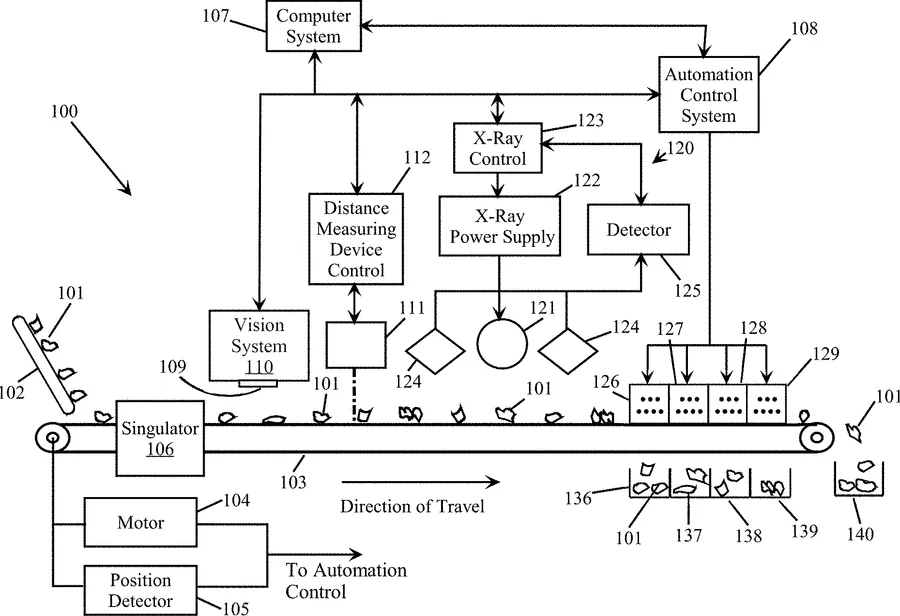
3 inventors: Nalin Kumar, Manuel Gerardo Garcia, Jr. and 1 moreA material sorting system sorts materials utilizing a vision system that implements a machine learning system in order to identify or classify each of the materials, which are then sorted into separate groups based on such an identification or classification. The material sorting system may include an x-ray fluorescence system to perform a classification of the materials in combination with the vision system, whereby the classification efforts of the vision system and x-ray fluorescence system are combined in order to classify and sort the materials.
9citations
ZymeQuest Inc 2023
6 inventors: Robert R. Andrews and 5 more7citations
Prince Mohammad bin Fahd University 2020
2 inventors: Faizan Ahmed and 1 moreFull ranking
Each number shows how many times the patent was used as a reference by new U.S. patents granted in 2025. Tap any of them to see the drawing, who invented it and what it does.
UHV Technologies Inc2020
9citations
Top of the listWhat it does
A material sorting system sorts materials utilizing a vision system that implements a machine learning system in order to identify or classify each of the materials, which are then sorted into separate groups based on such an identification or classification. The material sorting system may include an x-ray fluorescence system to perform a classification of the materials in combination with the vision system, whereby the classification efforts of the vision system and x-ray fluorescence system are combined in order to classify and sort the materials.
ZymeQuest Inc2023
9citations
Top of the listWhat it does
The present invention includes a spray drying disposable device for use in a spray drying system. The disposable has a spray drying head and a plasma drying chamber. The head has a spray dry nozzle assembly in fluid communication with the plasma source and the pressurized aerosol gas source. The pressurized gas flows in a vortex pattern that atomizes plasma droplets in the chamber. The head also includes a plenum has uniform air pressure of the drying gas. A baffle plate forms the floor of the plenum having drying gas jets that supply drying gas to the chamber. The atomized plasma droplets evaporate in the presence of the drying gas emitted from the jets to obtain dried plasma particles and humid air. A capture filter captures the dried plasma particles and allows the humid air to pass. The humid air passes through the gas outlet and the exhaust port.
Prince Mohammad bin Fahd University2020
7citations
78% of 1st (9)What it does
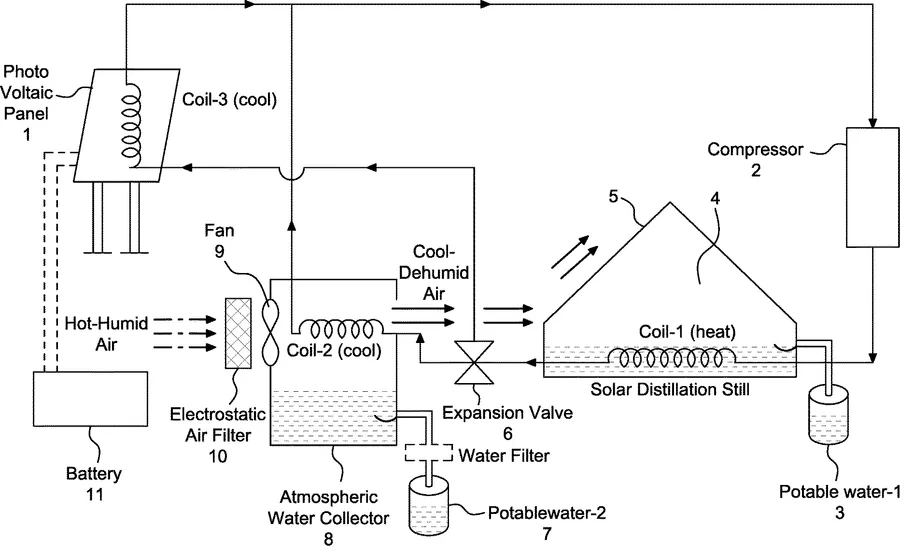
A hybrid system for freshwater production utilizing the latent heat of condensation of atmospheric air humidity as a source of thermal energy to evaporate freshwater in a brine or saline and delivered to the saline evaporating chamber by a heat pump. Distillates form on both sides of the heat transfer, and intensification of humidity condensation in the air leads to the intensification of saline evaporation contributing to the overall increased yield of freshwater. The process is optimized by integrated systems in which the waste heat of inside and outside sources and the heat sink effect of the saline feed amplify the COP and SEER indexes of the installation. The technological regimes in which the equipment is used are intensified and optimized, cutting the desalination costs to the ranges affordable to the general population residing in arid regions in need of such technology.
UHV Technologies Inc2019
6citations
67% of 1st (9)What it does
A material sorting system sorts materials, such as scrap pieces composed of unknown metal alloys, as a function of their detected x-ray fluorescence. The x-ray fluorescence may be converted into an elemental composition signature that is then compared to an elemental composition signature of a reference material in order to identify and/or classify each of the materials, which are then sorted into separate groups based on such an identification/classification. The material sorting system may include an in-line x-ray tube having a plurality of separate x-ray sources, each of which can irradiate a separate stream of materials to be sorted.
National Recovery Technologies Inc2000
6citations
67% of 1st (9)What it does
PCT No. PCT/US97/19680 Sec. 371 Date Jul. 12, 1999 Sec. 102(e) Date Jul. 12, 1999 PCT Filed Nov. 3, 1997 PCT Pub. No. WO98/19799 PCT Pub. Date May 14, 1998A method and apparatus are disclosed for classifying materials utilizing a computerized touch sensitive screen or other computerized pointing device for operator identification and electronic marking of spatial coordinates of materials to be extracted. An operator positioned at a computerized touch sensitive screen views electronic images of the mixture of materials to be sorted as they are conveyed past a sensor array which transmits sequences of images of the mixture either directly or through a computer to the touch sensitive display screen. The operator manually "touches" objects displayed on the screen to be extracted from the mixture thereby registering the spatial coordinates of the objects within the computer. The computer then tracks the registered objects as they are conveyed and directs automated devices including mechanical means such as air jets, robotic arms, or other mechanical diverters to extract the registered objects.
Innovative Picking Technologies Inc2004
6citations
67% of 1st (9)What it does
A sortation system includes a track arrangement and a series of carriers which are movable on the track arrangement, such as by a roller chain or the like. A series of sort stations are provided at various locations along the track arrangement, and items are placed into the carriers at an induction station. Each carrier is programmed at the induction station with a destination sort station, according to the identity of the item carried by the carrier. Each sort station has a unique identification arrangement, such as a sort station module which emits a sort station identification signal which is received by the carriers as the carriers are moved toward the sort stations. If the sort station identification signal matches the destination identification programmed into the carrier, a trip mechanism associated with the sort station is activated so as to discharge the item from the carrier. The carrier is then reset and transported to the induction station for receiving another item to be sorted. If the sort station identification signal does not match the destination identification of the carrier, the carrier advances to the next sort station until the destination sort station is reached.
Spur Concepts Inc2018
5citations
56% of 1st (9)What it does
A system and method for an intelligent hair drying/styling apparatus with user information transmission and storage capabilities is herein provided. The hair drying/styling apparatus houses a control circuit board and an infrared or temperature sensor (or camera) in order detect an individual's hair condition moisture level to determine a user specific, customizable dryer setting. The information detected by the sensor is stored locally, on a proximal Internet-enabled device, or on a remote or cloud-based server and accessed by the hair drying/styling apparatus through a wireless local area network connectivity function. Accordingly, a user's hair temperature-drying profile may be stored and later recalled to provide optimal hair styling setting customized for that user. This innovation will enable any number of hair professionals and or end consumers to improve styling and dry time. Such a profile may contain a proprietary V-Factor calculation that will, among other applications, correspond to the use of a coordinated and optimized hair spray solution. According to the present invention, energy usage is reduced to enable a more efficient design.
MineSense Technologies Ltd2018
5citations
56% of 1st (9)What it does
A mining shovel with compositional sensors comprises a bucket having various inward looking sensors positioned throughout the bucket. The bucket can also have disposed thereon a control enclosure that houses processing equipment that receives and analyzes the data collected by the inward looking sensors. The mining shovel with compositional sensors can be used as part of a system to manage a mining field, including generating and transmitting instructions directing where to deposit material located in the bucket based on the data collected from the inward looking sensors positioned in the bucket.
ANTEL ARITMA TESISLERI INSAAT SANAYI VE TICARET AS2020
5citations
56% of 1st (9)What it does
The subject matter of the invention is a nozzle-brush automatic cleaning filtration device with motor reducer performing physical cleaning by trapping coarse particles and suspended solid contents in any liquids. These filters perform physical cleaning by trapping coarse particles and suspended solid contents in any liquids.
Working Drones Inc2022
5citations
56% of 1st (9)What it does
A system including an unmanned aerial vehicle (UAV) or aerial robotic system (ARS) to perform at least one task to an object during flight of the UAV in a movement mode configured for maneuvering near a surface of the object. A task sensor configured to sense at least one parameter of the surface. An adjustable sensor arm attachable to the UAV and supporting the task sensor to facilitate the task performed to the surface of the object by the UAV during flight of the UAV. The sensor arm being resilient to impact forces caused by direct contact of the sensor or sensor arm with the surface to bend, spring or swivel relative to a contour of the surface.
Independent inventors2022
5citations
56% of 1st (9)What it does
A method for reducing moisture of a material includes applying microwave radiation combined with RF to the material to heat and evacuate moisture from the material during a heating cycle and optionally alternating heating cycles with drying/cooling cycles. In particular, a method is disclosed to reduce a moisture content level of a material that comprises introducing the material or plant vertically into a drying enclosure using a vertical feed mechanism. The method further includes irradiating a portion of the material or plant with microwave to heat and vaporize moisture within the material or plant during a heating cycle; combining or alternating the microwave with RF heating for a time interval during the heating cycle to reduce the moisture content level of the material or plant; and alternating the heating cycle with a cooling cycle. In certain aspects or embodiments, the system comprises at least an enclosure, a vertical track mechanism, a microwave delivery device, a radio-frequency emitter and power supply.
Clevertivity LLC2023
5citations
56% of 1st (9)What it does
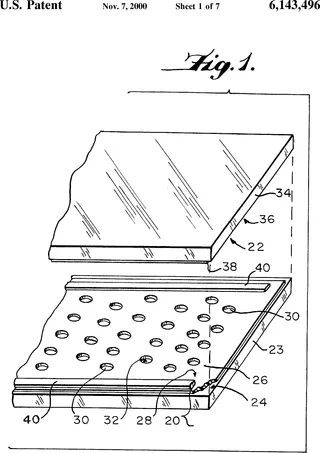
A liquid removal device is for removing a liquid from a surface. The liquid removal device includes a chassis comprising a handle and an absorber drum and an extractor drum both rotationally coupled with the chassis. The absorber drum includes a cylinder, where an absorbent layer is positioned on an outer drum surface of the absorber drum. The extractor drum includes a reservoir configured to retain the liquid absorbed from the surface, an outer extractor surface, and a plurality of apertures defined by the outer extractor surface in fluid communication with the reservoir. The extractor drum is movable between a first position and a second position. In the first position, at least a first portion of the plurality of apertures are in contact with the absorbent layer. In the second position, the first portion of the plurality of apertures are not in contact with the absorbent layer.
Heesung Catalysts Corp2024
5citations
56% of 1st (9)What it does
This disclosure is directed to catalyst compositions, catalytic articles for purifying exhaust gas emissions and methods of making and using the same. In particular, the disclosure relates to a catalytic article including a catalytic material on a substrate, wherein the catalytic material has a first layer and a second layer. The first layer provides effective lean NO x trap functionality and the second layer provides effective three-way conversion of carbon monoxide, hydrocarbons, and nitrogen oxides (NO x ).
ZymeQuest Inc2024
5citations
56% of 1st (9)What it does
The present invention includes a spray drying disposable device for use in a spray drying system. The disposable has a spray drying head and a plasma drying chamber. The head has a spray dry nozzle assembly in fluid communication with the plasma source and the pressurized aerosol gas source. The pressurized gas flows in a vortex pattern that atomizes plasma droplets in the chamber. The head also includes a plenum has uniform air pressure of the drying gas. A baffle plate forms the floor of the plenum having drying gas jets that supply drying gas to the chamber. The atomized plasma droplets evaporate in the presence of the drying gas emitted from the jets to obtain dried plasma particles and humid air. A capture filter captures the dried plasma particles and allows the humid air to pass. The humid air passes through the gas outlet and the exhaust port.
Independent inventors1942
5citations
56% of 1st (9)Independent inventors1963
5citations
56% of 1st (9)Scott and Fetzer Co1974
5citations
56% of 1st (9)What it does
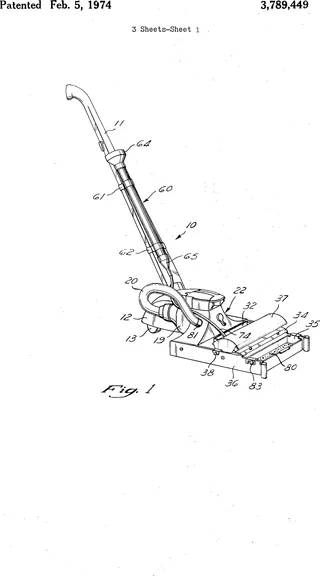
A hard surface floor cleaner which is capable of being detachably mounted to the motor housing of a vacuum cleaner is disclosed. The floor scrubber includes a liquid dispenser for flowing a quantity of liquid detergent onto the floor, a scrubbing brush, and a power driven, open cell polyurethane roll for picking up the liquid detergent and dirt from the floor. A receptacle for picked up detergent and dirt is mounted ahead of the roll and a shear blade is mounted between the receptacle and the roll. An edge of the shear blade contacts the surface of the roll for shearing detergent and dirt therefrom and depositing detergent and dirt in the receptacle. An air blast assists in drying the floor.
Agency of Industrial Science and Technology1982
5citations
56% of 1st (9)What it does
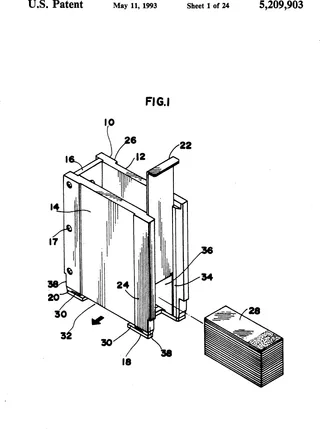
An apparatus for the preparation of blood smear specimens is constructed to successively discharge glass slides from a stack. A first glass slide is laid horizontally near the point of discharge and a second glass slide is discharged into a slanted position with its lower edge in contact with the leading end of horizontal glass slide. A drop of blood is applied near the leading end of the horizontal glass slide behind the position of contact of the glass slide in the slanted position and the horizontal glass slide is advanced to smear the blood onto the horizontal slide using the slanted glass slide as a coater. The slanted glass slide is then allowed to fall into the horizontal position and another glass slide is discharged from the stack into the slanted position, whereafter the process is repeated.
Independent inventors1991
5citations
56% of 1st (9)What it does
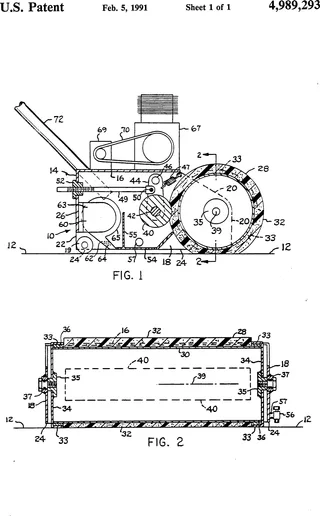
A mechanism for removing water from tennis courts. A large roller having a sponge sleeve thereon is rolled over the court surface to pick up water lying on the court surface. As the roller rotates the sponge sleeve moves against a smaller roller that exerts a localized pressure force on the sponge material; water is thus squeezed out of the sponge pores into a collection tank located below the small roller. The mechanism further includes a heating device located behind the large roller to direct heated gas onto the tennis court surface to evaporate moisture that was not picked up by the roller (sponge).
Independent inventors1992
5citations
56% of 1st (9)What it does
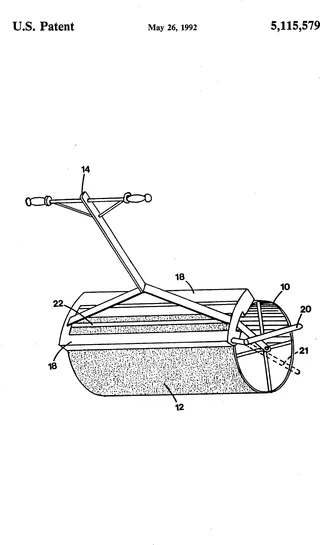
A roller for removing water from tennis courts, bowling greens, verandahs and other surfaces has a roller covered with a water absorbent material covered with a net of nylon for prevention of abrasion damage, and a handle. The handle including channels on either side sufficiently close to the surface of the absorbent material to receive water squeezed therefrom by a transverse spring loaded member. Outlet pipes are fitted to the ends of the channels and these are movable from a position in which the end is above the level of the relevant channel for retention of the water until desired to discharge it, when the pipe is swivelled to a second position in which the free end is below the channel.
Sysmex Corp1993
5citations
56% of 1st (9)What it does
A blood analyzer system incorporates a conveyor for handling and transporting sample blood through at least one blood analyzer and an automatic blood smear generator under the control of a programmable controller. Blood samples are stored in sample containers having identifiers for the sample blood that they contain. These sample containers are transported through the system in protective racks that permit the reading of the identifiers. The results of analysis by one or more blood analyzers in the system determine the need for performing or omitting subsequent operations on a particular sample blood. When a smeared blood sample is to be made, the controller assures that the smear thickness is consistent with other samples regardless of the thickness or viscosity of the sample blood. If the system fails to make a required smeared blood sample, a detector sounds an alarm, warning of a system failure.
Independent inventors1996
5citations
56% of 1st (9)What it does
A dryer has an internal drying chamber for accommodating articles that are subjected to heated circulating air to remove moisture from the articles. An air mixing chamber contains a first fan for moving air through a heater into the drying chamber. A second fan draws air out of the drying and mixing chambers and discharges air back into the mixing chamber through a filter into the external environment. The heated air in the drying chamber is mixed with fresh air and recirculated through the drying chamber to minimize heat losses and increase drying effectiveness. Ultraviolet lamps within the drying chamber destroy contaminants in the air and articles within the chamber. A boot dryer, located in the drying chamber, has fans that move air through tubes used to support boots, shoes, skates and socks. Ultraviolet light in the boot chamber destroys contaminants in the air in the boot chamber. One modification of the dryer has a bench to permit the dryer to be used as a dry sauna. A further modification of the dryer has a rotatable tumbler for accommodating articles to be dried.
Secajo Ltd1996
5citations
56% of 1st (9)What it does
A multi-functional assembly of a hair dryer and accessory units in which a base unit is attached to a wall for producing heated air which is supplied to a hand-held dryer. A garment dryer is attachable in the assembly to receive the heated air produced by the base unit. The accessory units are capable of being detachably interconnected with one another and with the base unit in a variety of ways. The interconnection is made by security connectors to prevent unauthorized disconnection of the units. Electrical power is supplied to circuit boards in the base unit and the electrical power is transmitted to the accessory units when they are connected in the assembly. A ground fault circuit interrupter or similar safety device in the base unit controls electrical supply to all units. When the accessory unit is a garment dryer, the dryer drum is driven by a turbine wheel, driven by heated air. The drive turbine of the wheel is utilized to produce electrical energy to achieve various functions, such as door latching, alarm signal generation, moisture determination, etc.
Independent inventors2003
5citations
56% of 1st (9)What it does
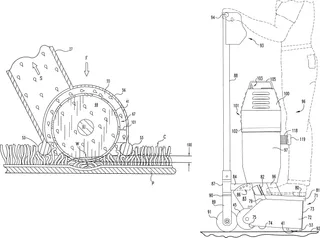
A deflooding device includes a suction chamber having a downward facing opening therein and a compression roller protruding downward therefrom. The roller has openings or other structure to allow water to exist beneath and inside the roller while the roller is compressing the carpet nap. A propulsion motor drive system coupled to the roller allows the unit to be self-propelled and driven at variable speeds in forward and reverse across the carpet. Operator weight standing or sitting on the device, with or without ballast or discrete additional weight applies compression of roller on carpet. Coupling from suction chamber to on-board, adjacent, or remote vacuum source is convenient.
Andis Co2013
5citations
56% of 1st (9)What it does
A hair dryer. The hair dryer includes a housing having a nozzle portion terminating at a drying end. The housing defines a cavity. The hair dryer further includes at least one light source coupled to the housing and positioned to direct light towards a work area proximate the drying end.
The University of Texas System2016
5citations
56% of 1st (9)What it does
A photovoltaic-thermal (PV-T) system and a method of cooling photovoltaic (PV) cells in the system is described herein. Energy from an excitation source such as the sun hits the PV cells in the PV-T system causing heating that reduces PV efficiency. The PV cells are cooled by fluid in an intact heat-transfer system making a heated water byproduct while the PV cells release a form of energy. In addition, the PV-T system can be implemented in a desalination plant to harvest energy and heat for desalination processes. The present invention also includes methods for transferring heat from PV cells to the earth to improve PV performance and reduce thermal shock to the PV cells.
King Fahd University of Petroleum and Minerals2016
5citations
56% of 1st (9)What it does
The water desalination system using geothermal energy includes a plurality of stepped evaporation trays. Salt water flows into the uppermost tray and cascades to each successively lower tray to overflow from the lowermost tray when all trays are full. Two sloped glass panels pass solar energy therethrough to heat the water. Condensation collects on the inner panel and runs down the panel to collect in a trough at the lower edge. The desalinated water then flows to a collection tank. Additional heat energy is provided by a working fluid (e.g., air) that is pumped to subterranean levels where significant geothermal heat is produced. The heated air is then circulated around the evaporation trays to enhance evaporation. The required energy for the operation of the system may be provided by solar cells and wind energy. Mirrors and functionally graded material further increase the efficiency of the desalination system.
The inventions companies themselves named as the foundation of their work — the market’s references.
Highlights
Solexa Ltd Great Britain 2006
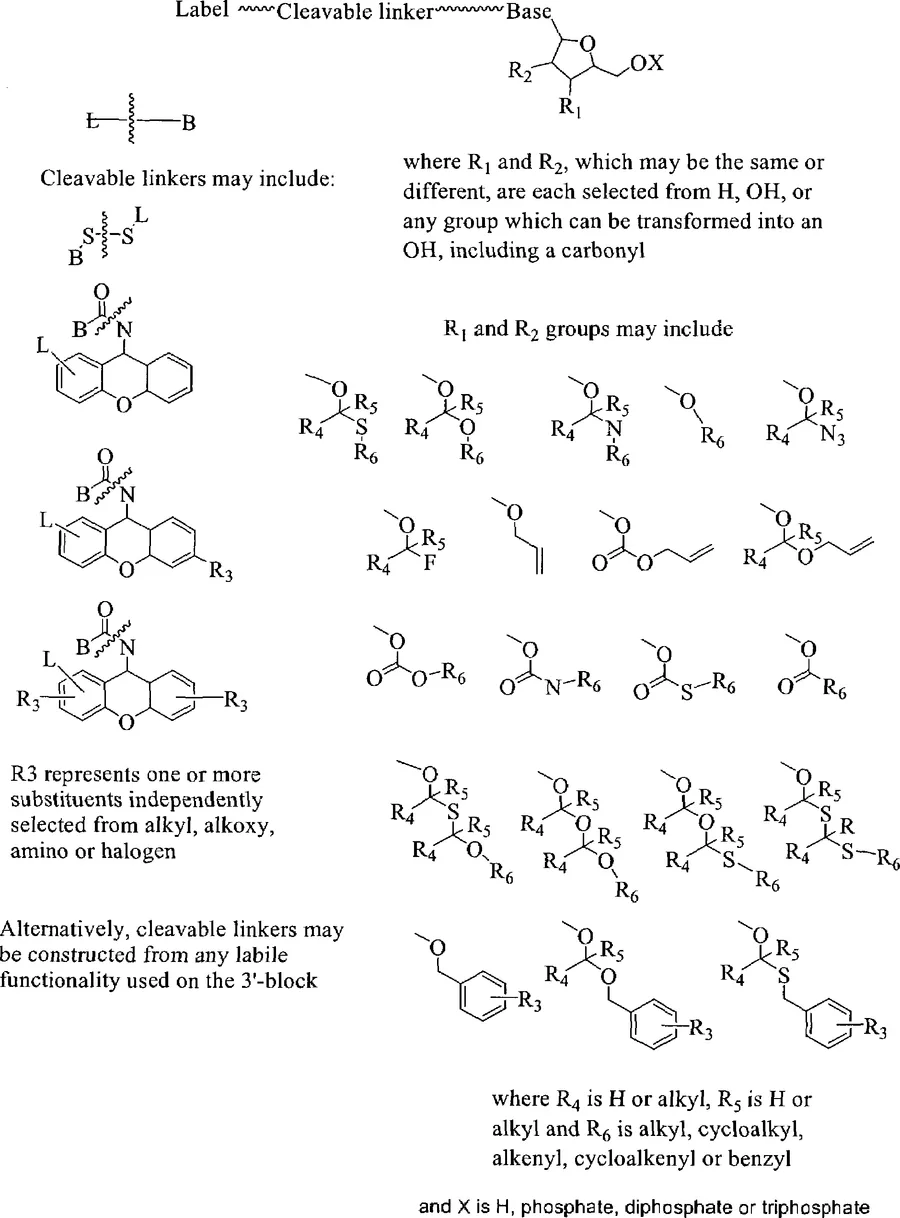
5 inventors: Colin Barnes, Shankar Balasubramanian and 3 moreNucleosides and nucleotides are disclosed that are linked to detectable labels via a cleavable linker group.
24citations
Pyrosequencing AB 2001
4 inventors: På and 3 more23citations
CuraGen Corp 2001
2 inventors: Jonathan M. Rothberg and 1 moreFull ranking
Each number shows how many times the patent was used as a reference by new U.S. patents granted in 2025. Tap any of them to see the drawing, who invented it and what it does.
Solexa Ltd Great Britain2006
25citations
Top of the listWhat it does
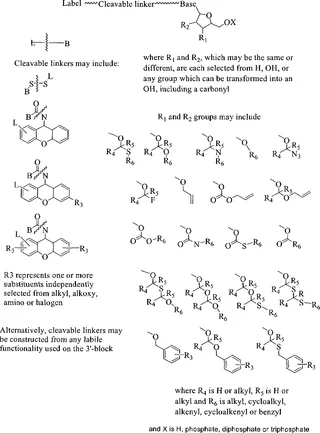
Nucleosides and nucleotides are disclosed that are linked to detectable labels via a cleavable linker group.
Pyrosequencing AB2001
24citations
96% of 1st (25)What it does
The present invention provides a method of identifying a base at a target position in a single-stranded sample DNA sequence wherein an extension primer, which hybridizes to the sample DNA immediately adjacent to the target position, is provided and the sample DNA and extension primer are subjected to a polymerization reaction in the presence of a deoxynucleotide or dideoxynucleotide, whereby the deoxynucleotide or dideoxynucleotide will only become incorporated and release pyrophosphate if it is complementary to the base in the target position. Release of pyrophosphate is detected enzymatically and pyrophosphate detection enzyme(s) are included in the polymerization step.
CuraGen Corp2001
23citations
92% of 1st (25)What it does
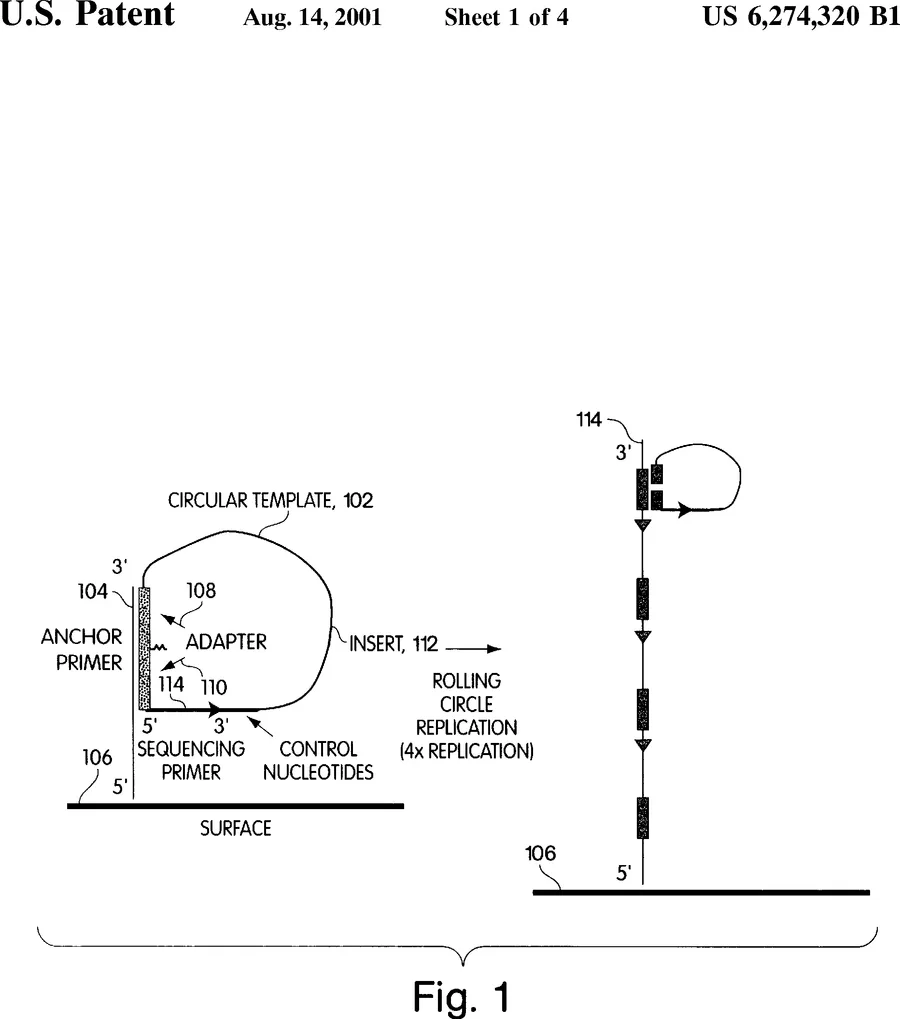
Disclosed herein are methods and apparatuses for sequencing a nucleic acid. The method includes annealing a population of circular nucleic acid molecules to a plurality of anchor primers linked to a solid support, and amplifying those members of the population of circular nucleic acid molecules which anneal to the target nucleic acid, and then sequencing the amplified molecules by detecting the presence of a sequence byproduct.
Solexa Ltd Great Britain2006
23citations
92% of 1st (25)What it does
Methods for amplification and sequencing of at least one nucleic acid comprising the following steps: (1) forming at least one nucleic acid template comprising the nucleic acid(s) to be amplified or sequenced, wherein said nucleic acid(s) to be amplified or sequenced, wherein said nucleic acid(s) contains at the 5′ end an oligonucleotide sequence Y and at the 3′ end an oligonucleotide sequence Z and, in addition, the nucleic acid(s) carry at the 5′ end a means for attaching the nucleic acid(s) to a solid support; (2) mixing said nucleic acid template(s) with one or more colony primers X, which can hybridize to the oligonucleotide sequence Z and carries at the 5′ end a means for attaching the colony primers to a solid support, in the presence of a solid support so that the 5′ ends of both the nucleic acid template and the colony primers bind to the solid support; (3) performing one or more nucleic acid amplification reactions on the bound template(s), so that nucleic acid colonies are generated and optionally, performing at least one step of sequence determination of one or more of the nucleic acid colonies generated. Solid supports, kits and apparatus for use in these methods.
Pyrosequencing AB2001
22citations
88% of 1st (25)What it does
The present invention relates to a method of sequencing DNA, based on the detection of base incorporation by the release of pyrophosphate (PPi) and simultaneous enzymatic nucleotide degradation.
Cytonix Corp2000
21citations
84% of 1st (25)What it does
Methods of detecting and quantifying genomic nucleic acid molecule sequences are provided using the simultaneous amplification of a plurality of discrete nanoliter-sized samples. A miniaturized closed assembly is also provided for carrying out amplification of a nucleic acid molecule by polymerase chain reaction in multiple nanoliter-sized samples. Methods of filling miniaturized sample chambers are also provided as are methods for determining the number of template molecules in a sample by conducting replicate nucleic acid sequence amplification reactions on a set of terminally diluted samples and counting the number of positive amplification reactions. The methods can be used to detect a single starting nucleic acid target molecule.
Cetus Corp1987
20citations
80% of 1st (25)What it does
The present invention is directed to a process for amplifying and detecting any target nucleic acid sequence contained in a nucleic acid or mixture thereof. The process comprises treating separate complementary strands of the nucleic acid with a molar excess of two oligonucleotide primers, extending the primers to form complementary primer extension products which act as templates for synthesizing the desired nucleic acid sequence, and detecting the sequence so amplified. The steps of the reaction may be carried out stepwise or simultaneously and can be repeated as often as desired. In addition, a specific nucleic acid sequence may be cloned into a vector by using primers to amplify the sequence, which contain restriction sites on their non-complementary ends, and a nucleic acid fragment may be prepared from an existing shorter fragment using the amplification process.
Cetus Corp1987
19citations
76% of 1st (25)What it does
The present invention provides a process for detecting the presence or absence of at least one specific nucleic acid sequence in a sample or distinguishing between two different nucleic acid sequences in said sample, wherein each nucleic acid sequence to be detected consists of two separate strands, which process comprises amplifying the specific sequence or sequences (if present) by (a) treating the sample with one oligonucleotide primer for each of the two strands of each different specific nucleic acid sequence being detected under hybridizing conditions such that for each strand of each different sequence being detected an extension product of each primer is synthesized which is complementary to each nucleic acid strand, wherein said primers are selected so as to be substantially complementary to each strand of each specific sequence such that the extension product synthesized from one primer, when it is separated from its complement, serves as a template for synthesis of an extension product of the other primer; (b) treating the product of step (a) under denaturing conditions to separate the primer extension products from their templates; (c) treating the product of step (b) with oligonucleotide primers such that a primer extension product is synthesized using each of the single strands produced in step (b) as a template; and detecting the thus amplified sequence or sequences (if present).
Mosaic Technologies Inc1997
18citations
72% of 1st (25)What it does
This invention features methods and apparatus for performing nucleic acid hybridization and amplification processes on a support. Such methods and apparatus are useful for synthesizing nucleic acid and detecting target nucleic acid for diagnostics and therapeutics.
Lynx Therapeutics Inc1998
18citations
72% of 1st (25)What it does
Method and compositions are provided for analyzing nucleic acid sequences based on repeated cycles of duplex extension along a single stranded template. Preferably, such extension starts from a duplex formed between an initializing oligonucleotide and the template. The initializing oligonucleotide is extended in an initial extension cycle by ligating an oligonucleotide probe to its end to form an extended duplex. The extended duplex is then repeatedly extended by subsequent cycles of ligation. During each cycle, the identity of one or more nucleotides in the template is determined by a label on, or associated with, a successfully ligated oligonucleotide probe. Preferably, the oligonucleotide probe has a blocking moiety, e.g. a chain-terminating nucleotide, in a terminal position so that only a single extension of the extended duplex takes place in a single cycle. The duplex is further extended in subsequent cycles by removing the blocking moiety and regenerating an extendable terminus. The invention provides a method of sequencing nucleic acids which obviates electrophoretic separation of similarly sized DNA fragments, and which eliminates the difficulties associated with the detection and analysis of spacially overlapping bands of DNA fragments in a gel or like medium. The invention also obviates the need to generate DNA fragments from long single stranded templates with a DNA polymerase.















 Environmental technology

 Measurement

 Materials and metallurgy

 Medical technology

 Basic materials chemistry

 Other special machines

 Biotechnology