





Citation
Quand un nouveau brevet mentionne un brevet antérieur comme référence. Plus de citations = plus d’influence.
Basic Materials Chemistry · 2025
Les 23 brevets qui ont le plus servi de référence aux nouvelles inventions du domaine.
Quand un nouveau brevet mentionne un brevet antérieur comme référence. Plus de citations = plus d’influence.
L’expert de l’office américain des brevets. Il cite ce qui est trop proche de la demande.
trop procheL’entreprise ou l’inventeur qui demande le brevet. Il cite ce qui l’a inspiré.
source d’inspirationLes inventions que l’office a le plus utilisées comme comparaison : les plus proches de ce qui est breveté aujourd’hui.
À la une
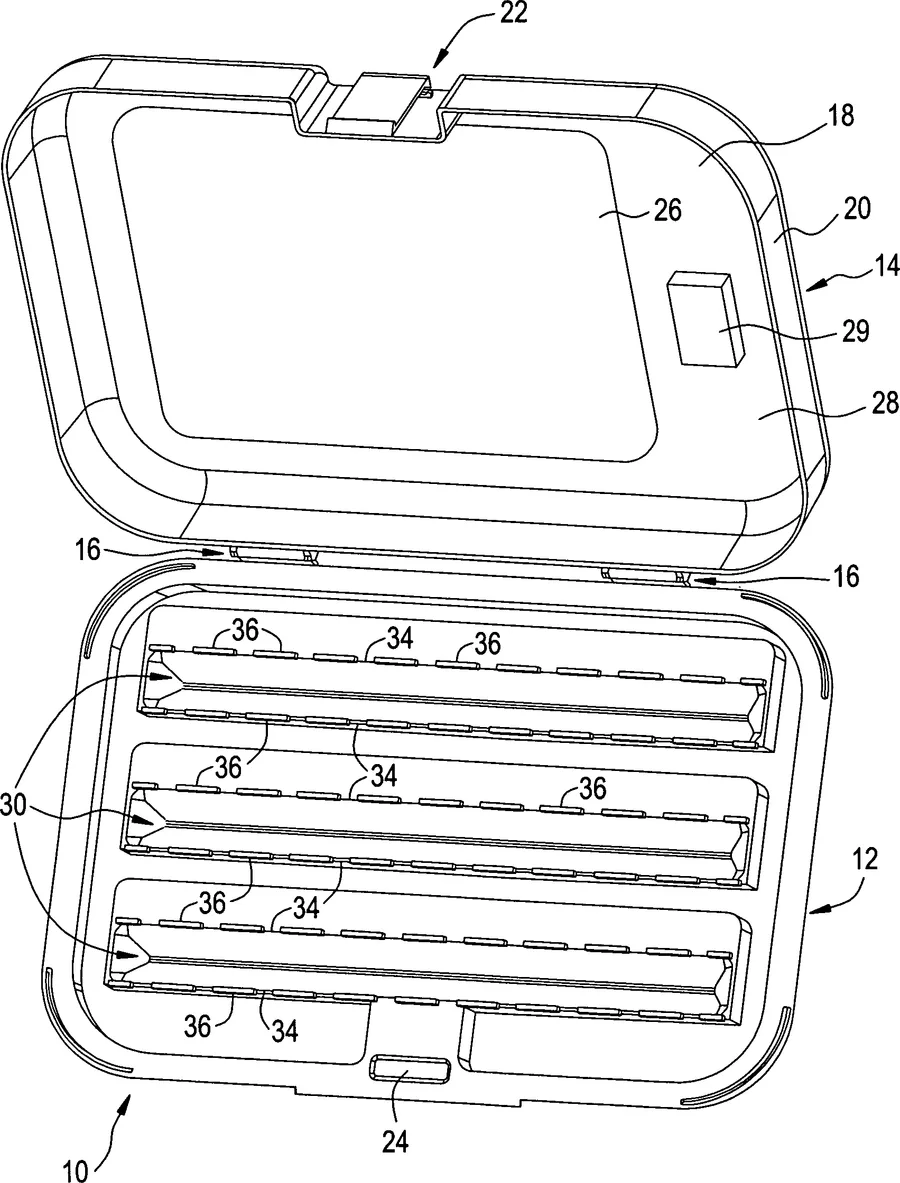
Atrion Medical Products Inc 2006
2 inventeurs: Rowland W. Kanner et Larry Lee YoungA needle counter device which utilizes an adhesive disposed in one or more, preferably V-shaped, troughs. The adhesive provides instant, strong grip upon contact, but also provides very low resistance to needle penetration (i.e., it is easy to stick a needle in the adhesive, but difficult to pull the needle out). The device includes a base and a lid, and opens and closes much like a book. Once the device is closed, the device tends to remain closed unless intentionally opened. A thin layer of adhesive may be provided on the inside of the lid, to retain used surgical blades, and a piece of resilient foam may also be provided for temporarily “parking” a suture needle. The sides of each trough are lined with structure which serves to prevent an accidentally laid surgical instrument from unintentionally contacting the adhesive. Numerical indices provide a quick visual, counting assist. Double sticky tape, covered with a protective peel away release sheet, can be provided on the outside surface of the lid and/or the base, for adhering the device to work surfaces.
5citations
UOP LLC 1999
2 inventeurs: Tom N. Kalnes et 1 autres4citations
Iogen Corp 2022
2 inventeurs: Patrick J. Foody et 1 autresClassement complet
Chaque nombre indique combien de fois le brevet a servi de référence à de nouveaux brevets délivrés aux États-Unis en 2025. Touchez-en un pour voir le dessin, ses inventeurs et ce qu’il fait.
Atrion Medical Products Inc2006
8citations
En tête du classementDe quoi s’agit-il · original en anglais
A needle counter device which utilizes an adhesive disposed in one or more, preferably V-shaped, troughs. The adhesive provides instant, strong grip upon contact, but also provides very low resistance to needle penetration (i.e., it is easy to stick a needle in the adhesive, but difficult to pull the needle out). The device includes a base and a lid, and opens and closes much like a book. Once the device is closed, the device tends to remain closed unless intentionally opened. A thin layer of adhesive may be provided on the inside of the lid, to retain used surgical blades, and a piece of resilient foam may also be provided for temporarily “parking” a suture needle. The sides of each trough are lined with structure which serves to prevent an accidentally laid surgical instrument from unintentionally contacting the adhesive. Numerical indices provide a quick visual, counting assist. Double sticky tape, covered with a protective peel away release sheet, can be provided on the outside surface of the lid and/or the base, for adhering the device to work surfaces.
UOP LLC1999
5citations
63 % du 1er (8)De quoi s’agit-il · original en anglais
A process for the simultaneous conversion of waste lubricating oil and pyrolysis oil derived from organic waste to produce a synthetic crude oil by means of contacting the combined feed with a hot hydrogen-rich gaseous stream to increase the temperature of the combined feed to vaporize at least a portion of the distillable organic compounds contained therein which is immediately hydrogenated in a hydrogenation reaction zone. The resulting effluent from the hydrogenation reaction zone is then introduced into a hydroprocessing zone to produce higher hydrogen-content hydrocarbons and to remove heterogeneous components such as sulfur, oxygen, nitrogen and halide, for example. The resulting effluent is cooled and partially condensed to produce a gaseous stream containing hydrogen and gaseous water-soluble inorganic compounds and a liquid stream containing hydrocarbon compounds. The gaseous stream is scrubbed to remove the gaseous water-soluble organic compounds and to thereby produce a hydrogen-rich gaseous recycle stream.
Iogen Corp2022
4citations
50 % du 1er (8)De quoi s’agit-il · original en anglais
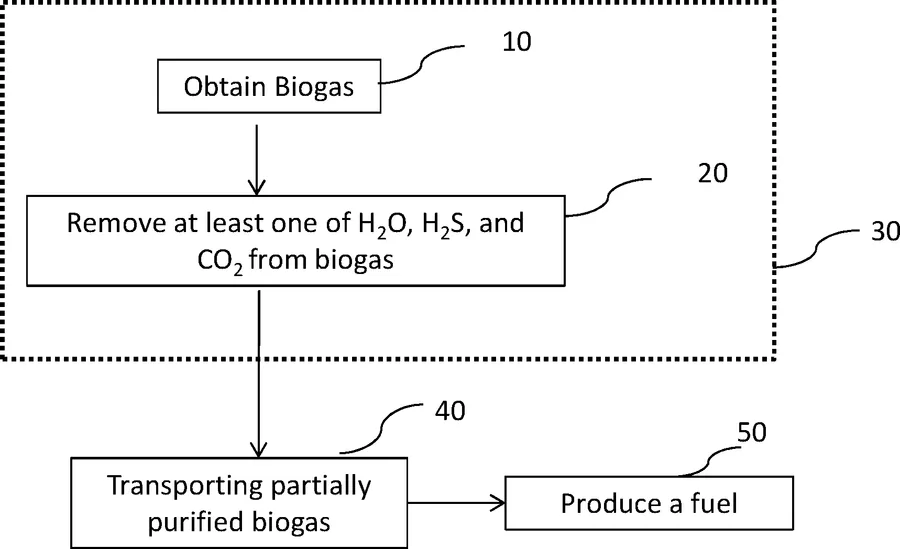
A method for providing a fuel includes providing a partially purified biogas at a first processing site, where the partially purified biogas is produced by multiple biogas sources and/or from multiple feedstock sources. The partially purified biogas is compressed, fed to a mobile tank, and transported by vehicle to a second processing site. At the second processing site, which may also receive biogas from a plurality of biogas sources, the partially purified biogas is further processed to produce a fuel or fuel intermediate.
Covestro Netherlands BV2024
4citations
50 % du 1er (8)De quoi s’agit-il · original en anglais
The present invention relates to a multi-aziridine compound having: a) from 2 to 6 of the following structural units (A): (A) whereby R′, R″, R1, R2, R3 and R4 are as defined herein m is an integer from 1 to 6; b) one or more linking chains wherein each one of these linking chains links two of the structural units A; and c) a molecular weight in the range from 600 Daltons to 5000 Daltons. The multi-aziridine compound can be used for example for crosslinking of for example carboxylic acid functional polymers dissolved and/or dispersed in an aqueous medium.
Covestro Netherlands BV2025
4citations
50 % du 1er (8)De quoi s’agit-il · original en anglais
The present invention relates to a multi-aziridine compound having: ⋅a) from 2 to 6 of the following structural units (A): whereby R 1 is H, R 2 and R 4 are independently chosen from H or an aliphatic hydrocarbon group containing from 1-4 carbon atoms, R 3 is an aliphatic hydrocarbon group containing from 1-4 carbon atoms, R′═H or an aliphatic hydrocarbon group containing from 1 to 4 carbon atoms; R″ and R′″ are independently chosen from an aliphatic hydrocarbon group containing from 1 to 4 carbon atoms, a cycloaliphatic hydrocarbon group containing from 4 to 12 carbon atoms or an aromatic hydrocarbon group containing from 6 to 12 carbon atoms, b) one or more linking chains wherein each one of these linking chains links two of the structural units A; and c) a molecular weight in the range from 600 Daltons to 5000 Daltons.
Universal Oil Products Co1968
4citations
50 % du 1er (8)Pullman Inc1970
4citations
50 % du 1er (8)EI Du Pont de Nemours and Co1972
4citations
50 % du 1er (8)De quoi s’agit-il · original en anglais
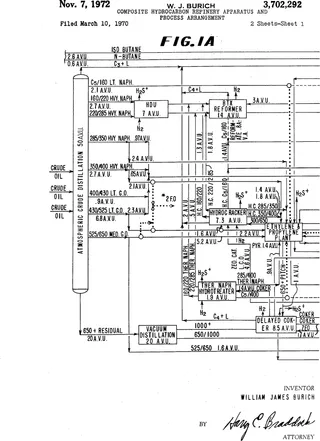
A HIGHLY INTEGRATED CRUDE OIL REFINERY ARRANGEMENT FOR PRODUCING FUEL AND CHEMICAL PRODUCTS, INVOLVING CRUDE OIL DISTILLATION MEANS, HYDROCRACKING MEANS, DELAYED COKING MEANS, REFORMING MEANS, ETHYLENE AND PROPYLENE PRODUCING MEANS COMPRISING A PYROLYSIS STEAM CRACKING UNIT AND A PYROLYSIS PRODUCTS SEPARATION UNIT, CATALYTIC CRACKING MEANS, AROMATIC PRODUCT RECOVERY MEANS, BUTADIENE RECOVERY MEANS AND ALKYLATION MEANS IN A HIGHLY FLEXIBLE, CLOSELY CONTROLLED AND INTER-RELATED SYSTEM TO PRODUCE A HIGH CONVERSION OF CRUDE OIL TO CHEMICALS OF AS HIGH AS ABOUT 50% AND A CONVERSION OF CRUDE OIL TO GASOLINE AND JET FUEL AS LOW AS ABOUT 50% FOR A MAXIMUM VALUE COMBINATION OF WIDELY VARIED PRODUCTS.
BP PLC1978
4citations
50 % du 1er (8)De quoi s’agit-il · original en anglais
This invention relates to a method of producing olefins from a wax distillate feed by cracking the feed in the presence of steam at a catalyst temperature of between 650° and 900° C over a manganese catalyst.
UOP LLC1985
4citations
50 % du 1er (8)De quoi s’agit-il · original en anglais
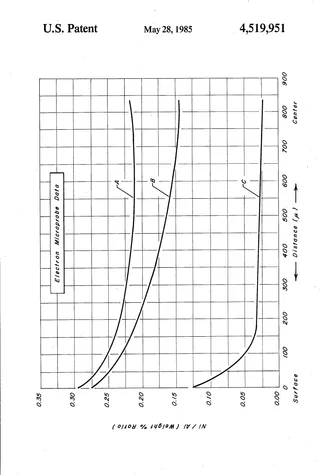
Substantial improvement in the selectivity of reduction of fatty materials may be obtained using as a catalyst a zerovalent Group VIII metal dispersed in an eggshell distribution on a porous support. When the catalyst is nickel on gamma-alumina it is possible to perform continuous reduction using a fixed catalyst bed with selectivities which equal or exceed that exhibited by conventional nickel catalysts used in a batch process.
Chevron USA Inc2000
4citations
50 % du 1er (8)De quoi s’agit-il · original en anglais
The invention includes a process of making a lubricating oil composition including: a process for making a high VI lubricating oil composition including the steps of (1) contacting a waste plastics feed including mainly polyethylene in a pyrolysis zone at pyrolysis conditions, whereby at least a portion of the waste plastics feed is cracked, thereby forming a pyrolysis zone effluent including 1-olefins and n-paraffins; (2) passing the pyrolysis zone effluent, including a heavy fraction and a middle fraction, the pyrolysis effluent middle fraction including 1-olefins, to a separations zone; where the pyrolysis effluent heavy fraction portion is separated from the pyrolysis effluent middle fraction; (3) passing the pyrolysis effluent heavy fraction to a hydrogenation zone; and (4) passing at least a portion of the hydrogenation zone effluent to a catalytic isomerization dewaxing zone, where at least a portion of the hydrogenation zone effluent is contacted with a isomerization dewaxing catalyst at isomerization dewaxing conditions thereby forming a high VI lubricating oil composition.
Membrane Technology and Research Inc2003
4citations
50 % du 1er (8)De quoi s’agit-il · original en anglais
A process for treating natural gas or other methane-rich gas to remove excess nitrogen. The invention relies on two-stage membrane separation, using methane-selective membranes for the first stage and nitrogen-selective membranes for the second stage. The process enables the nitrogen content of the gas to be substantially reduced, without requiring the membranes to be operated at very low temperatures.
Ellycrack AS2003
4citations
50 % du 1er (8)De quoi s’agit-il · original en anglais
A catalytic cracking process is described wherein the cracking takes place in a reactor under the influence of a rotating fluidized bed catalyst and compressed gases and/or steam is injected in order to effect movement of the catalyst bed.
Les inventions que les entreprises elles-mêmes ont citées comme base de leur travail : les références du marché.
À la une
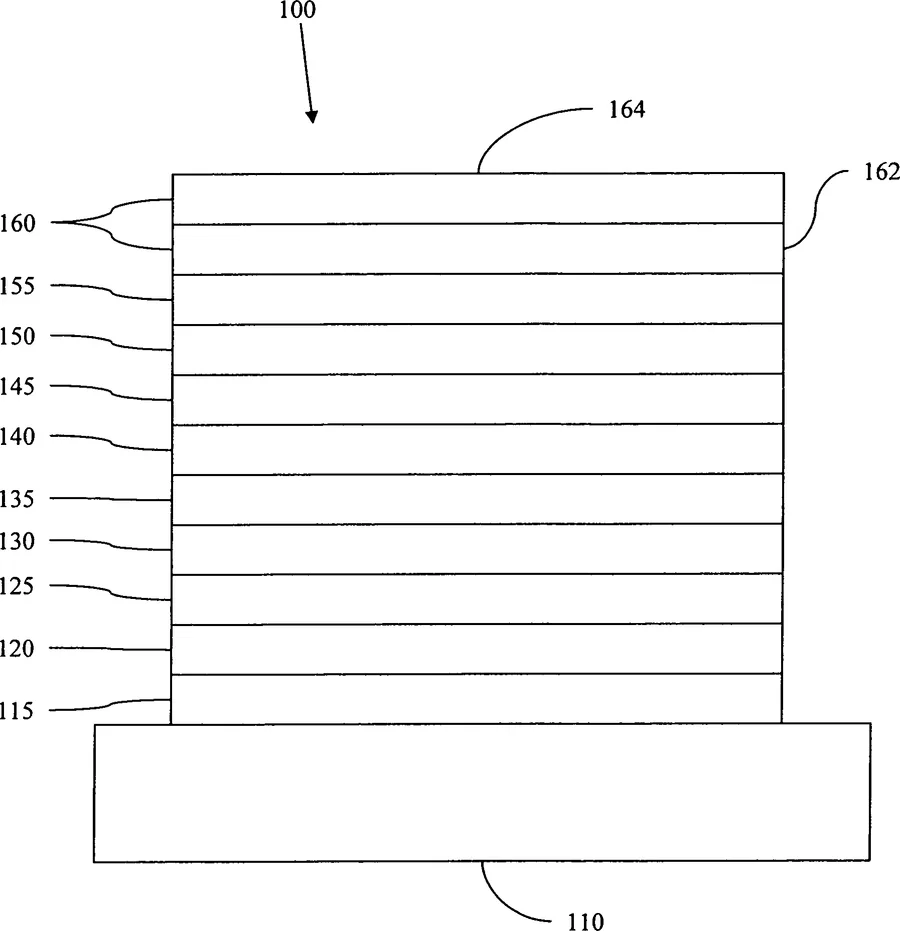
Universal Display Corp 2007
4 inventeurs: Robert Walters, Jui-Yi Tsai et 2 autresThe present invention relates to organic light emitting devices (OLEDs), and more specifically to phosphorescent organic materials used in such devices. More specifically, the present invention relates to emissive phosphorescent material which comprise at least one tridentate ligand bound to a metal center, wherein at least one of the bonds to the tridentate ligand is a carbon-metal bond.
86citations
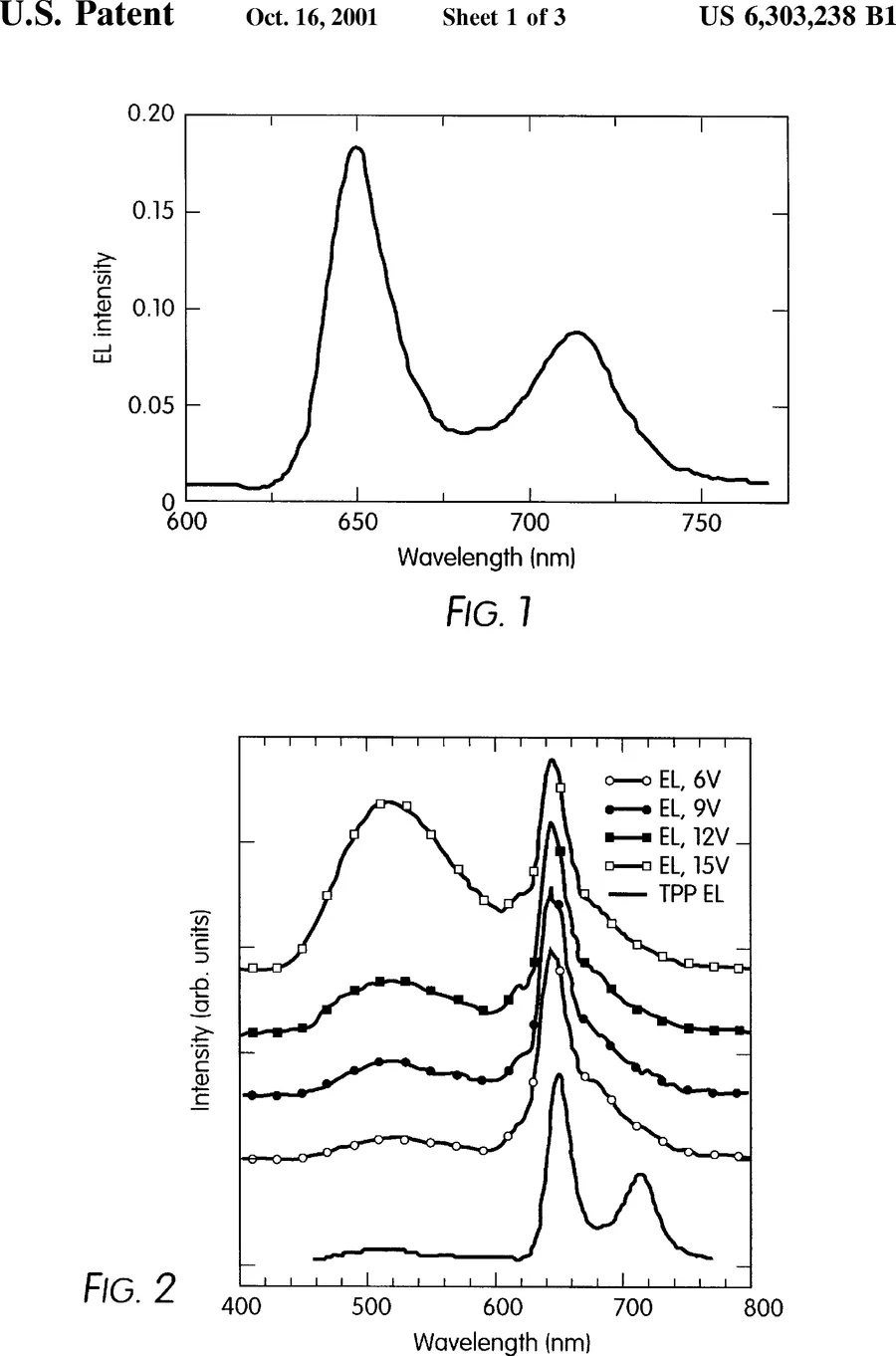
Princeton University 2001
6 inventeurs: Mark E. Thompson et 5 autres85citations
Princeton University 1998
3 inventeurs: Gong Gu et 2 autresClassement complet
Chaque nombre indique combien de fois le brevet a servi de référence à de nouveaux brevets délivrés aux États-Unis en 2025. Touchez-en un pour voir le dessin, ses inventeurs et ce qu’il fait.
Universal Display Corp2007
87citations
En tête du classementDe quoi s’agit-il · original en anglais
The present invention relates to organic light emitting devices (OLEDs), and more specifically to phosphorescent organic materials used in such devices. More specifically, the present invention relates to emissive phosphorescent material which comprise at least one tridentate ligand bound to a metal center, wherein at least one of the bonds to the tridentate ligand is a carbon-metal bond.
Princeton University2001
86citations
99 % du 1er (87)De quoi s’agit-il · original en anglais
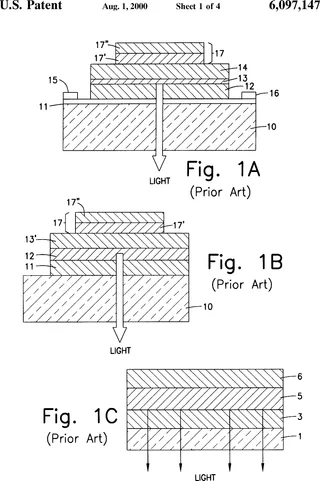
Organic light emitting devices are disclosed which are comprised of a heterostructure for producing electroluminescence wherein the heterostructure is comprised of an emissive layer containing a phosphorescent dopant compound. For example, the phosphorescent dopant compound may be comprised of platinum octaethylporphine (PtOEP), which is a compound having the chemical structure with the formula:
Princeton University1998
85citations
98 % du 1er (87)De quoi s’agit-il · original en anglais
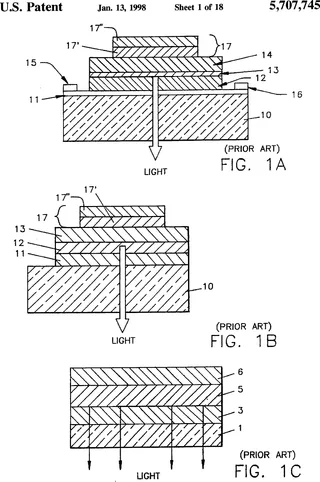
An organic light emitting device (OLED) is disclosed for which the hole transporting layer, the electron transporting layer and/or the emissive layer, if separately present, is comprised of a non-polymeric material. A method for preparing such OLED's using vacuum deposition techniques is further disclosed.
Princeton University1998
83citations
95 % du 1er (87)De quoi s’agit-il · original en anglais
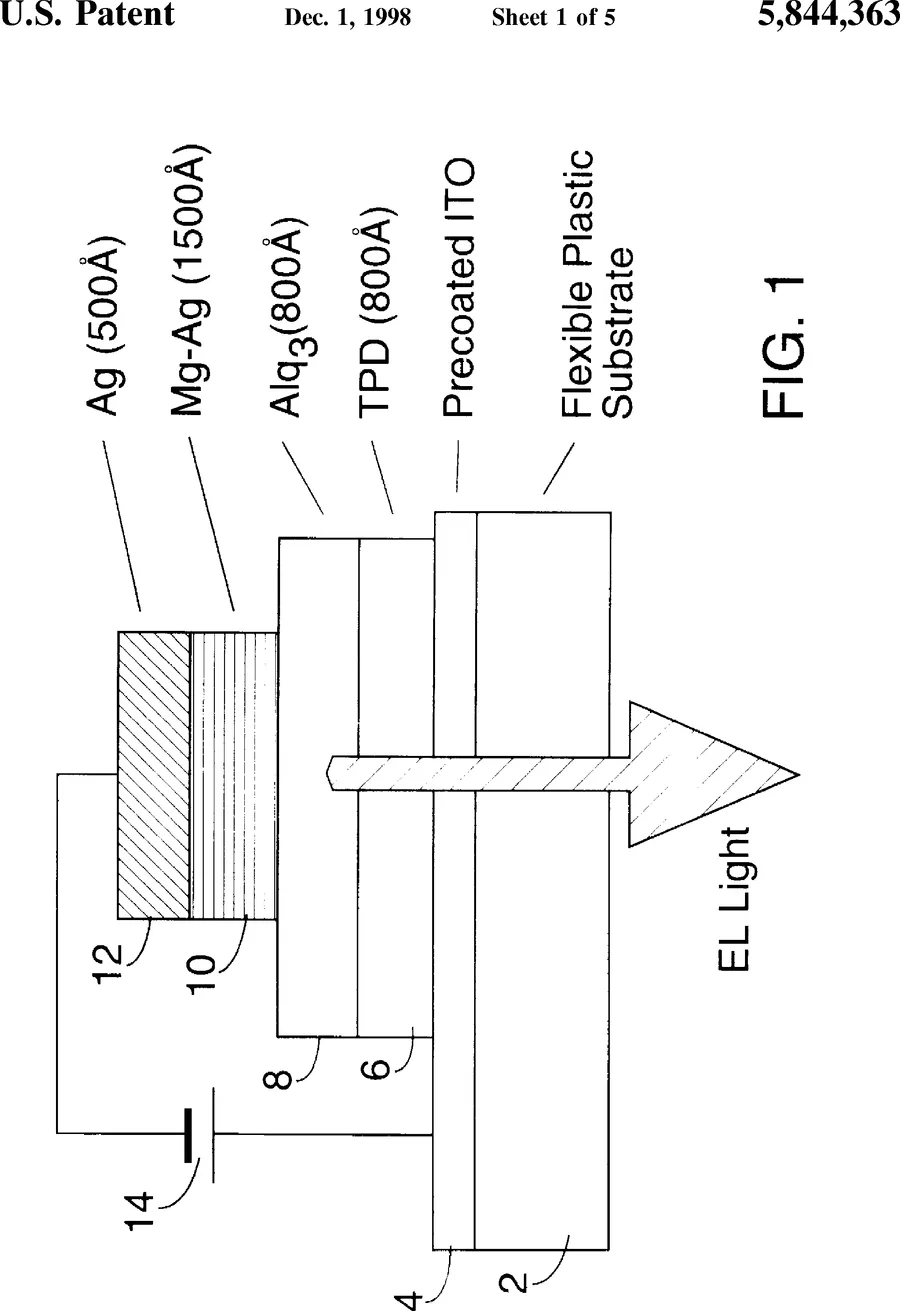
A multicolor organic light emitting device employs vertically stacked layers of double heterostructure devices which are fabricated from organic compounds. The vertical stacked structure is formed on a glass base having a transparent coating of ITO or similar metal to provide a substrate. Deposited on the substrate is the vertical stacked arrangement of three double heterostructure devices, each fabricated from a suitable organic material. Stacking is implemented such that the double heterostructure with the longest wavelength is on the top of the stack. This constitutes the device emitting red light on the top with the device having the shortest wavelength, namely, the device emitting blue light, on the bottom of the stack. Located between the red and blue device structures is the green device structure. The devices are configured as stacked to provide a staircase profile whereby each device is separated from the other by a thin transparent conductive contact layer to enable light emanating from each of the devices to pass through the semitransparent contacts and through the lower device structures while further enabling each of the devices to receive a selective bias.
Princeton University2000
79citations
91 % du 1er (87)De quoi s’agit-il · original en anglais
A light emitting device including a pixel having a substantially transparent anode; a hole transporting layer over the anode; an emission layer over the hole transporting layer; a blocking layer over the emission layer; an electron transporting layer over the blocking layer; and a cathode in electrical contact with the electron transporting layer.
Princeton University1997
78citations
90 % du 1er (87)De quoi s’agit-il · original en anglais
A multicolor organic light emitting device employs vertically stacked layers of double heterostructure devices which are fabricated from organic compounds. The vertical stacked structure is formed on a glass base having a transparent coating of ITO or similar metal to provide a substrate. Deposited on the substrate is the vertical stacked arrangement of three double heterostructure devices, each fabricated from a suitable organic material. Stacking is implemented such that the double heterostructure with the longest wavelength is on the top of the stack. This constitutes the device emitting red light on the top with the device having the shortest wavelength, namely, the device emitting blue light, on the bottom of the stack. Located between the red and blue device structures is the green device structure. The devices are configured as stacked to provide a staircase profile whereby each device is separated from the other by a thin transparent conductive contact layer to enable light emanating from each of the devices to pass through the semitransparent contacts and through the lower device structures while further enabling each of the devices to receive a selective bias. The devices are substantially transparent when de-energized, making them useful for heads-up display applications.
Eastman Kodak Co1991
77citations
89 % du 1er (87)De quoi s’agit-il · original en anglais
An internal junction organic electroluminescent device is disclosed comprising in sequence, an anode, an organic hold injecting and transporting zone, an organic electron injecting and transporting zone, and a cathode. The hole injecting and transporting zone includes a tertiary amine containing at least two tertiary amine moieties and including attached to a tertiary amine nitrogen atom an aromatic moiety containing at least two fused aromatic rings.
Eastman Kodak Co1988
75citations
86 % du 1er (87)De quoi s’agit-il · original en anglais
An electroluminescent device is disclosed having a luminescent zone of less than one μm in thickness comprised of an organic host material capable of sustaining hole-electron recombination and a fluorescent material capable of emitting light in response to energy released by hole-electron recombination.
Universal Display Corp2008
73citations
84 % du 1er (87)De quoi s’agit-il · original en anglais
An organic light emitting device is provided. The device has an anode, a cathode, and an organic layer disposed between the anode and the cathode. The organic layer comprises an emissive material having a transition metal and two or three bidentate ligands, which may be photoactive ligands. The bidentate photoactive ligands may be bound to the transition metal through a carbon-metal bond and a nitrogen-metal bond to form a cyclometallated ring. The organic layer may have the formula LX a -(L) b M, wherein X is a linking group that links two or more ligand L and M is a metal.
University of Southern California2008
70citations
80 % du 1er (87)De quoi s’agit-il · original en anglais
An organic light emitting device is provided. The device has an anode, a cathode and an organic layer disposed between the anode and the cathode. The organic layer comprises a compound further comprising one or more carbene ligands coordinated to a metal center.













 Chimie macromoléculaire et polymères

 Chimie organique fine

 Semi-conducteurs

 Surfaces et revêtements

 Autres machines spéciales

 Génie chimique

 Matériaux et métallurgie