



Citation
When a new patent lists an older one as a reference. More citations = more influence.
WIPO technology field · 2025
The 27 patent applications (not yet granted) that served most often as references for new inventions in this field.
Published applications are still under review: they may be granted, amended or rejected — but they already influence new inventions.
When a new patent lists an older one as a reference. More citations = more influence.
The U.S. Patent Office reviewer. Cites what is too similar to the application.
too similarThe company or inventor filing the patent. Cites what inspired their work.
inspirationThe inventions the Patent Office used most for comparison — the closest to what is being patented today.
Highlights
Transtar Group Ltd 2016
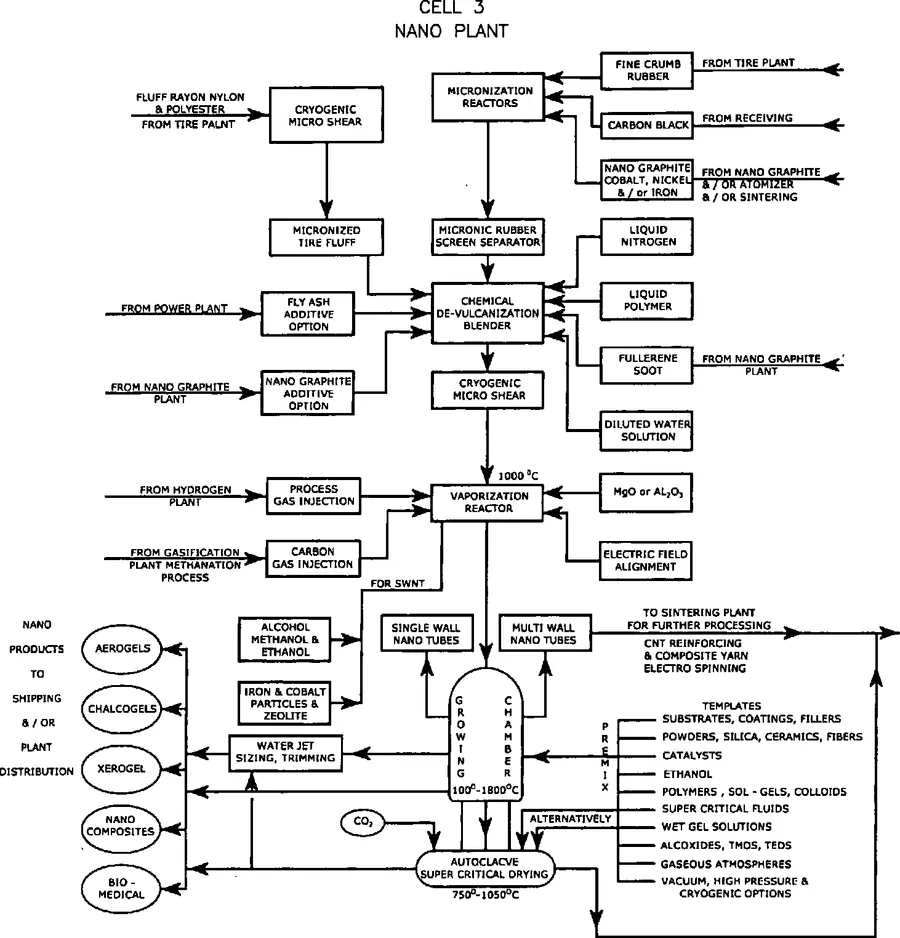
2 inventors: Allen D. Kaplan and Randall BradleyEco-friendly systems, methods and processes/processing (EFSMP) or an integrated Matrix encompasses stand-alone and/or interconnected modules for completely self-sustained, closed-loop, emission-free processing of multiple source feedstock that can include pretreatment, with poisoning materials isolated during pretreatment being further recycled to provide useful materials such as, for example, separated metals, carbon and fullerenes for production of nano materials, sulfur, water, sulfuric acid, gas, heat and carbon dioxide for energy production, and production of refined petroleum, at a highly-reduced cost over the best state-of-the-art refining methods/systems that meets new emissions standards as well as optimizes production output with new ultra-speed cycle times. By-products from the petroleum refining process which were previously discarded also now are recycled as renewable sources of energy (water, waste oil and rubber/coal derived pyrolyic (pyrolysis) oil, carbon gases and process gases), or recyclable resources, such as metals and precious metals, oxides, minerals, etc., can be obtained.
7citations
Beckman Coulter Inc 2013
2 inventors: Robert B. Gwynn and 1 more6citations
Aerogen Inc 2005
6 inventors: John Power and 5 moreFull ranking
Each number shows how many times the patent was used as a reference by new U.S. patents granted in 2025. Tap any of them to see the drawing, who invented it and what it does.
Transtar Group Ltd2016
11citations
Top of the listWhat it does
Eco-friendly systems, methods and processes/processing (EFSMP) or an integrated Matrix encompasses stand-alone and/or interconnected modules for completely self-sustained, closed-loop, emission-free processing of multiple source feedstock that can include pretreatment, with poisoning materials isolated during pretreatment being further recycled to provide useful materials such as, for example, separated metals, carbon and fullerenes for production of nano materials, sulfur, water, sulfuric acid, gas, heat and carbon dioxide for energy production, and production of refined petroleum, at a highly-reduced cost over the best state-of-the-art refining methods/systems that meets new emissions standards as well as optimizes production output with new ultra-speed cycle times. By-products from the petroleum refining process which were previously discarded also now are recycled as renewable sources of energy (water, waste oil and rubber/coal derived pyrolyic (pyrolysis) oil, carbon gases and process gases), or recyclable resources, such as metals and precious metals, oxides, minerals, etc., can be obtained.
Beckman Coulter Inc2013
7citations
64% of 1st (11)What it does
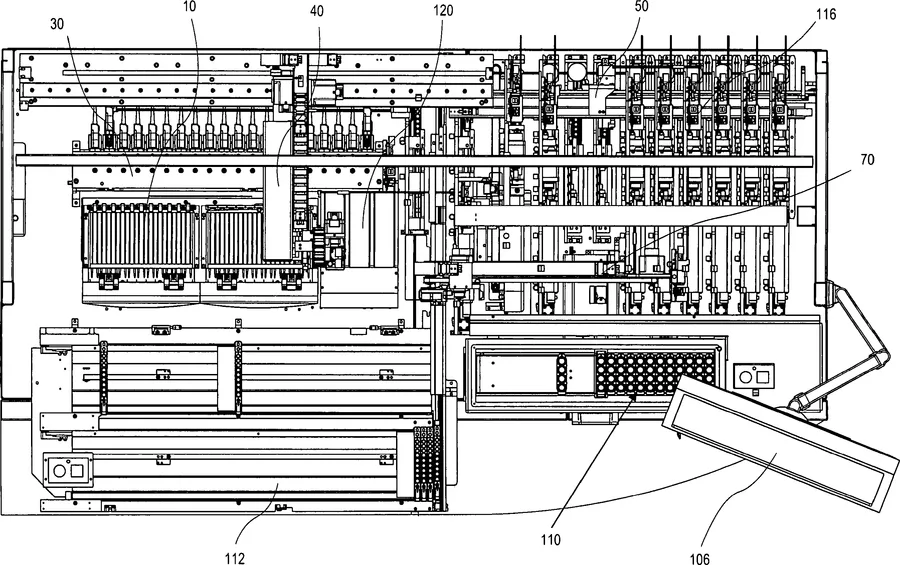
Systems and methods for processing and analyzing samples are disclosed. The system may process samples, such as biological fluids, using assay cartridges which can be processed at different processing locations. In some cases, the system can be used for PCR processing. The different processing locations may include a preparation location where samples can be prepared and an analysis location where samples can be analyzed. To assist with the preparation of samples, the system may also include a number of processing stations which may include processing lanes. During the analysis of samples, in some cases, thermal cycler modules and an appropriate optical detection system can be used to detect the presence or absence of certain nucleic acid sequences in the samples. The system can be used to accurately and rapidly process samples.
Aerogen Inc2005
6citations
55% of 1st (11)What it does
A nebuliser to deliver a medicament that includes a housing having a reservoir for the medicament, an aerosol generator that can be supplied the medicament from the reservoir, where the generator aerosolizes at least a portion of the medicament into an aerosol, a gas venting inlet to permit a gas to enter the nebuliser and form a mixture with the aerosol, and a passage through which the mixture of the aerosol and the gas is delivered to an outlet port of the nebuliser.
Sysmex Corp2007
6citations
55% of 1st (11)What it does
The present invention is to present a sample image obtaining system that can manage a smear slide easily and perform the operation from the preparation of a smear slide to imaging efficiently. The sample image obtaining system comprises: a sample smearing means for smearing a sample on a slide glass; an identification information reading means for reading identification information of the sample smeared on the slide glass, the slide glass having the identification information; a sample image obtaining means for obtaining an image of the sample smeared on the slide glass; a storing means for storing the image obtained by the sample image obtaining means and the identification information read by the identification information reading means; and a slide glass transferring means for transferring the sample smeared slide glass from the sample smearing means to the sample image obtaining means.
Independent inventors2015
6citations
55% of 1st (11)What it does
Provided is a consumer to industrial scale renewable energy based quintuple-generation systems and energy storage facility. The present invention has both mobile and stationary embodiments. The present invention includes energy recovery, energy production, energy processing, pyrolysis, byproduct process utilization systems, separation process systems and handling and storage systems, as well as an open architecture for integration and development of additional processes, systems and applications. The system of the present invention primarily uses adaptive metrics, biometrics and thermal imaging sensory analysis (including additional input sensors for analysis) for monitoring and control with the utilization of an integrated artificial intelligence and automation control system, thus providing a balanced, environmentally-friendly ecosystem.
Deere and Co2016
6citations
55% of 1st (11)What it does
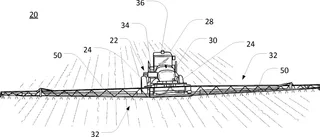
Embodiments of an equalization system include a spray system with a spray boom and a plurality of nozzles that have fluid flow measurement sensors to measure flow rate from each nozzle or each section of nozzles for different boom configurations. Based on a comparison of the flow indicators to the average value, target value or reference value, a deviation from a target nozzle outflow rate is determined The deviation is proportionally applied to adjust pulse width modulated nozzle control to equalize the performance of the nozzles or sections of nozzles.
Independent inventors2005
5citations
45% of 1st (11)What it does
The present invention provides microfabricated substrates and methods of conducting reactions within these substrates. The reactions occur in plugs transported in the flow of a carrier-fluid.
Medica Corp2008
5citations
45% of 1st (11)What it does
An apparatus and method of automated blood cell analysis uses technologies from other systems to create a new, robust, improved type of automated microscope, which uses electronic motors and a closed loop control system to minimize ambient factors, such as jarring and temperature changes. Pre-stained blood smear slides are first coated with a thin film of oil and are loaded into a carousel from which they can individually be analyzed. The slides are moved under a low magnification microscope; an optimal area of examination is determined; a focal plane map is calculated for that area, and the positions of white blood cell candidates are computed. The slide is then moved under a high power microscope where a refined focal plane map is computed and the individual white blood cell candidates are imaged. The cells are preclassified and the images are made available for analysis by the technician. Additionally, samples of red blood cells, equivalent to what the technician would do manually, are imaged and presented to the technician for evaluation. The technician may make notes on those cells, both red and white blood cells and archive them.
Independent inventors2010
5citations
45% of 1st (11)What it does
An automatic thin-section slides manufacturing system which reduces the burden of operators and automatically manufactures required number of thin section slide samples from plural embedded blocks while completely relating the manufactured thin section slide samples to the original embedded blocks to enable quality control at high precision, which comprises: a first transportation unit which is capable of transporting an arbitrarily selected embedded cassette from the plural embedded cassettes to the cutting position; a cutting unit which, after the embedded cassette is transported to the cutting position, cuts the embedded block to provide sheet-like thin sections at a predetermined thickness; a readout unit which reads out the individual data when the embedded cassette is transported to the cutting position; a flattening unit for flattening the thin section, which comprises a storage tank containing a liquid stored therein; a second transportation unit which transports the thin sections cut out by the cutting unit to the storage tank and sets them a float on the liquid surface; a transfer unit which prepares the thin section slide samples by transferring the thin section flattened in the flattening unit onto a substrate; a control unit which comprises a memory part for memorizing the individual data read out by the readout unit; and a recording unit which records the memorized individual data on the substrate upon receiving a command from the control unit.
Capstan AG Systems Inc2010
5citations
45% of 1st (11)What it does
A method and system has been developed to individually control the flow of liquid products from any nozzle within a plurality of nozzles using pulse width modulated solenoid actuated valves residing on a CAN communication network. The CAN communication network has been further developed to manage the high current requirements of the solenoid actuated valves, the large physical length and high number of nozzles used on modern agricultural application equipment and integration and retrofit requirements when used in conjunction with commercially available application rate control devices. The method and system simultaneously controls multiple flow and shutoff related inputs including but not limited to turn radius, nozzle overlap, swath reduction, nozzle spacing, fence row rates, wheel track rates, etc. The method and system will also simultaneously accept one or more external inputs from commercially available application rate control devices where other rate and shutoff inputs may be used, for example, variable rates per boom section based on GIS maps or multiple in-field sensors along the boom. The method and system further incorporates the artificial manipulation of commercial rate controller inputs and outputs to facilitate these individual nozzle control features and benefits without compromising the overall system flow control performed by the commercial rate controller.
Constitution Medical Inc2013
5citations
45% of 1st (11)What it does
Systems and methods analyzing body fluids contain cells including blood, bone marrow, urine, vaginal tissue, epithelial tissue, tumors, semen, and spittle are disclosed. The systems and methods utilize an improved technique for applying a monolayer of cells to a slide and generating a substantially uniform distribution of cells on the slide. Additionally aspects of the invention also relate to systems and method for utilizing multi-color microscopy for improving the quality of images captured by a light receiving device.
Altela Inc2013
5citations
45% of 1st (11)What it does
Systems for efficient generation of clean water from non-potable water leverage heat provided by concentrated solar power or waste heat is co-located at a source of non-potable water for efficient, low-cost operation based on steam provided by the source of heat. A process of using such systems operated by the steam provided and the non-potable water, is disclosed, to generate clean water and concentrate water.
UHV Technologies Inc2018
5citations
45% of 1st (11)What it does
A material sorting system sorts materials utilizing a vision system that implements a machine learning system in order to identify or classify each of the materials, which are then sorted into separate groups based on such an identification or classification. The material sorting system may include an x-ray fluorescence system to perform a classification of the materials in combination with the vision system, whereby the classification efforts of the vision system and x-ray fluorescence system are combined in order to classify and sort the materials.
Seeva Technologies Inc2020
5citations
45% of 1st (11)What it does
Systems and methods for cleaning, drying, and thermally managing vehicle components are described herein. In some embodiments, the vehicle components can include various sensors and, more particularly, the surfaces of cameras, LIDAR sensors, etc., that need to be clean to effectively perceive the environment around the vehicle. In one embodiment, a cleaning system includes a central delivery system configured to route fluid, such as washer fluid, along one or more delivery channels to remote holding chambers. The holding chambers can hold and/or heat the fluid before delivering the fluid to nozzles that spray the fluid on nearby vehicle components to clean the components.
Aqua-Belt Technologies LLC2020
5citations
45% of 1st (11)What it does
A system for generating potable water from source water contains an enclosed vessel, a heating unit, an air distributor, a condenser, and a collection vessel. A method for generating potable water from source water includes heating ambient air, bubbling heated air through source water producing saturated air, cooling the saturated air producing potable water, and collecting the potable water. A method of removing contaminants from ambient air includes heating ambient air, bubbling the heated air through source water to produce treated air and contaminant rich water, discharging the treated air, and discharging the contaminant rich water.
Najran University2023
5citations
45% of 1st (11)What it does
A nanocomposite photocatalyst is provided. The nanocomposite photocatalyst contains carbon nitride particles, a polymer composite comprising a conducting polymer and a carbon nanomaterial, the polymer composite being disposed on the carbon nitride particles, and noble metal nanoparticles disposed on both the polymer composite and the carbon nitride particles. Also provided is a method of forming the nanocomposite photocatalyst and a method of photodegrading an organic pollutant in water using the nanocomposite photocatalyst and visible light irradiation.
The inventions companies themselves named as the foundation of their work — the market’s references.
Highlights
10X Technologies Inc 2014
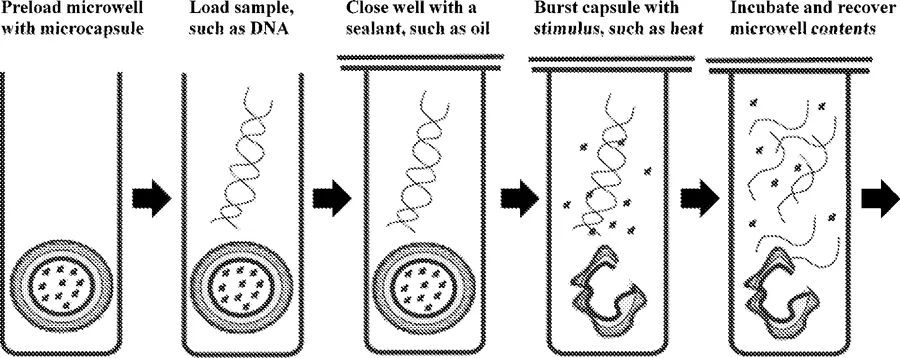
2 inventors: Benjamin Hindson and Serge SaxonovThis disclosure provides microwell capsule array devices. The microwell capsule array devices are generally capable of performing one or more sample preparation operations. Such sample preparation operations may be used as a prelude to one more or more analysis operations. For example, a device of this disclosure can achieve physical partitioning and discrete mixing of samples with unique molecular identifiers within a single unit in preparation for various analysis operations. The device may be useful in a variety of applications and most notably nucleic-acid-based sequencing, detection and quantification of gene expression and single-cell analysis.
20citations
Independent inventors 2016
Inventor: William Tan19citations
Independent inventors 2008
4 inventors: Darren Roy Link and 3 moreFull ranking
Each number shows how many times the patent was used as a reference by new U.S. patents granted in 2025. Tap any of them to see the drawing, who invented it and what it does.
10X Technologies Inc2014
21citations
Top of the listWhat it does
This disclosure provides microwell capsule array devices. The microwell capsule array devices are generally capable of performing one or more sample preparation operations. Such sample preparation operations may be used as a prelude to one more or more analysis operations. For example, a device of this disclosure can achieve physical partitioning and discrete mixing of samples with unique molecular identifiers within a single unit in preparation for various analysis operations. The device may be useful in a variety of applications and most notably nucleic-acid-based sequencing, detection and quantification of gene expression and single-cell analysis.
Independent inventors2016
20citations
95% of 1st (21)What it does
An electronic vaporization device, used for the purpose of inhalation of vapor created by using an ultrasonic signal generator to vaporize a solid or liquid; the apparatus also employs a Langevin transducer, a horn, and a probe, which is attached to the horn and is bent to optimize vibrational amplitude/displacement at the tip.
Independent inventors2008
19citations
90% of 1st (21)What it does
The present invention provides novel microfluidic substrates and methods that are useful for performing biological, chemical and diagnostic assays. The substrates can include a plurality of electrically addressable, channel bearing fluidic modules integrally arranged such that a continuous channel is provided for flow of immiscible fluids.
Ion Torrent Systems Inc2010
19citations
90% of 1st (21)What it does
Methods and apparatus relating to FET arrays including large FET arrays for monitoring chemical and/or biological reactions such as nucleic acid sequencing-by-synthesis reactions. Some methods provided herein relate to improving signal (and also signal to noise ratio) from released hydrogen ions during nucleic acid sequencing reactions.
Ion Torrent Systems Inc2010
19citations
90% of 1st (21)What it does
Methods and apparatuses relating to large scale FET arrays for analyte detection and measurement are provided. ChemFET (e.g., ISFET) arrays may be fabricated using conventional CMOS processing techniques based on improved FET pixel and array designs that increase measurement sensitivity and accuracy, and at the same time facilitate significantly small pixel sizes and dense arrays. Improved array control techniques provide for rapid data acquisition from large and dense arrays. Such arrays may be employed to detect a presence and/or concentration changes of various analyte types in a wide variety of chemical and/or biological processes.
Fluidigm Corp2004
18citations
86% of 1st (21)What it does
The invention provides systems, including apparatus, methods, and kits, for the microfluidic manipulation and/or detection of particles, such as cells and/or beads. The invention provides systems, including apparatus, methods, and kits, for the microfluidic manipulation and/or analysis of particles, such as cells, viruses, organelles, beads, and/or vesicles. The invention also provides microfluidic mechanisms for carrying out these manipulations and analyses. These mechanisms may enable controlled input, movement/positioning, retention/localization, treatment, measurement, release, and/or output of particles. Furthermore, these mechanisms may be combined in any suitable order and/or employed for any suitable number of times within a system. Accordingly, these combinations may allow particles to be sorted, cultured, mixed, treated, and/or assayed, among others, as single particles, mixed groups of particles, arrays of particles, heterogeneous particle sets, and/or homogeneous particle sets, among others, in series and/or in parallel. In addition, these combinations may enable microfluidic systems to be reused. Furthermore, these combinations may allow the response of particles to treatment to be measured on a shorter time scale than was previously possible. Therefore, systems of the invention may allow a broad range of cell and particle assays, such as drug screens, cell characterizations, research studies, and/or clinical analyses, among others, to be scaled down to microfluidic size. Such scaled-down assays may use less sample and reagent, may be less labor intensive, and/or may be more informative than comparable macrofluidic assays.
Ion Torrent Systems Inc2009
18citations
86% of 1st (21)What it does
Methods and apparatus relating to very large scale FET arrays for analyte measurements. ChemFET (e.g., ISFET) arrays may be fabricated using conventional CMOS processing techniques based on improved FET pixel and array designs that increase measurement sensitivity and accuracy, and at the same time facilitate significantly small pixel sizes and dense arrays. Improved array control techniques provide for rapid data acquisition from large and dense arrays. Such arrays may be employed to detect a presence and/or concentration changes of various analyte types in a wide variety of chemical and/or biological processes. In one example, chemFET arrays facilitate DNA sequencing techniques based on monitoring changes in hydrogen ion concentration (pH), changes in other analyte concentration, and/or binding events associated with chemical processes relating to DNA synthesis.
Ion Torrent Systems Inc2009
17citations
81% of 1st (21)What it does
Methods and apparatus relating to very large scale FET arrays for analyte measurements. ChemFET (e.g., ISFET) arrays may be fabricated using conventional CMOS processing techniques based on improved FET pixel and array designs that increase measurement sensitivity and accuracy, and at the same time facilitate significantly small pixel sizes and dense arrays. Improved array control techniques provide for rapid data acquisition from large and dense arrays. Such arrays may be employed to detect a presence and/or concentration changes of various analyte types in a wide variety of chemical and/or biological processes. In one example, chemFET arrays facilitate DNA sequencing techniques based on monitoring changes in hydrogen ion concentration (pH), changes in other analyte concentration, and/or binding events associated with chemical processes relating to DNA synthesis.
California Institute of Technology2002
16citations
76% of 1st (21)What it does
A microfluidic device for analyzing and/or sorting biological materials (e.g., molecules such as polynucleotides and polypeptides, including proteins and enzymes; viruses and cells) and methods for its use are provided. The device and methods of the invention are useful for sorting particles, e.g. virions. The invention is also useful for high throughput screening, e.g. combinatorial screening. The microfluidic device comprises a main channel and an inlet region in communication with the main channel at a droplet extrusion region. Droplets of solution containing the biological material are deposited into the main channel through the droplet extrusion region. A fluid different from and incompatible with the solution containing the biological material flows through the main channel so that the droplets containing the biological material do not diffuse or mix. Biological material within the droplets can be analyzed and/or sorted by detecting a predetermined characteristic of the biological sample in each droplet and sorting the droplet accordingly.
Quantalife Inc2010
16citations
76% of 1st (21)What it does
Systems, including apparatus and methods, for performing assays. These systems may involve separating sample components by partitioning them into droplets or other partitions, amplifying or otherwise reacting the components within the droplets, detecting the amplified components, or characteristics thereof, and/or analyzing the resulting data, among others.
Illumina Inc2012
16citations
76% of 1st (21)What it does
A fluidic device holder configured to orient a fluidic device. The device holder includes a support structure configured to receive a fluidic device. The support structure includes a base surface that faces in a direction along the Z-axis and is configured to have the fluidic device positioned thereon. The device holder also includes a plurality of reference surfaces facing in respective directions along an XY-plane. The device holder also includes an alignment assembly having an actuator and a movable locator arm that is operatively coupled to the actuator. The locator arm has an engagement end. The actuator moves the locator arm between retracted and biased positions to move the engagement end away from and toward the reference surfaces. The locator arm is configured to hold the fluidic device against the reference surfaces when the locator arm is in the biased position.





 Environmental technology
 Measurement

 Materials and metallurgy

 Medical technology
 Basic materials chemistry

 Other special machines

 Biotechnology